Garage Door Hinges: Numbers, Wear Signs and Replacement
The Short Answer
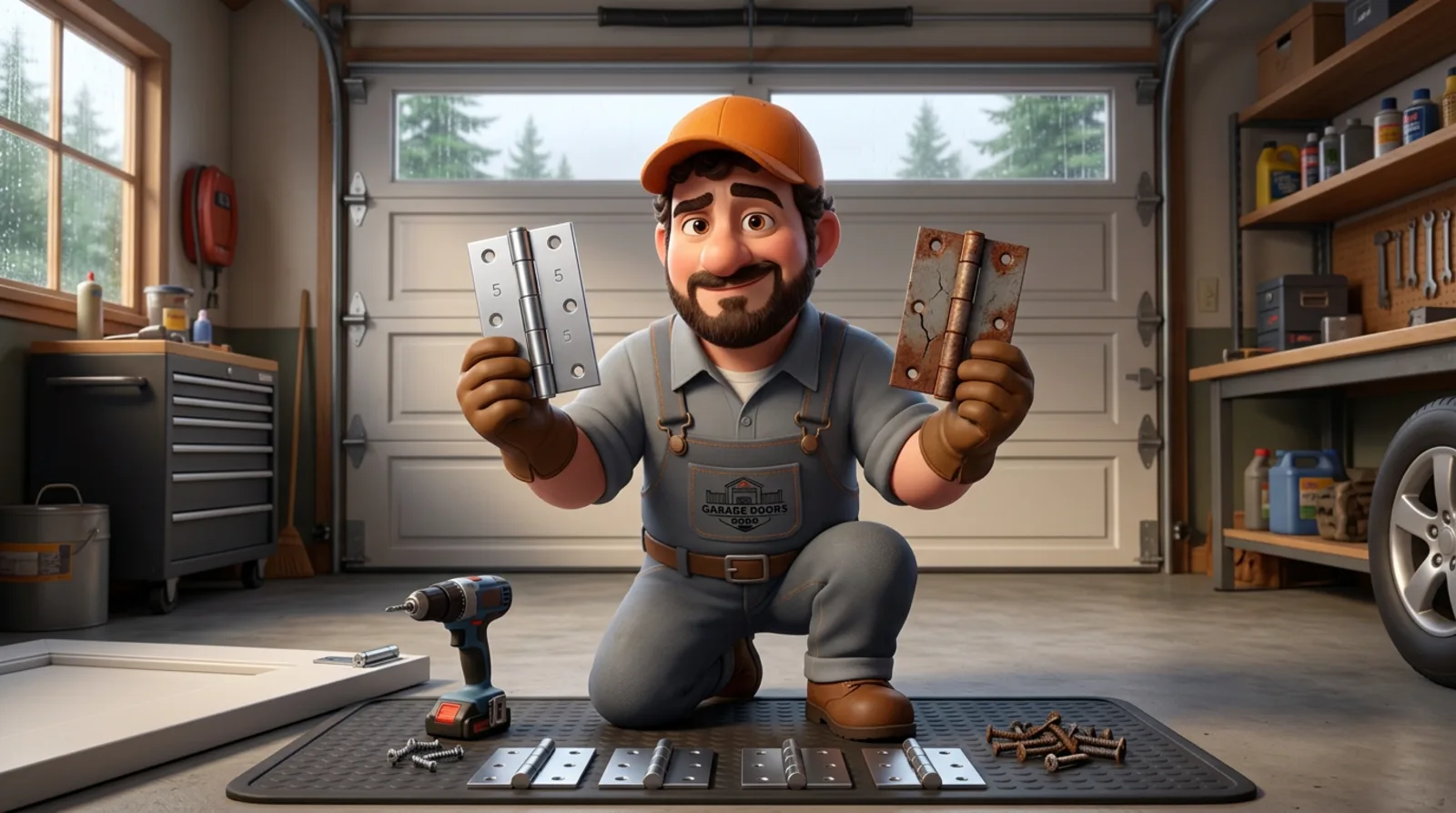
Garage door hinges join the sections of your door together and carry the rollers along the tracks. Each hinge is numbered by its position on the door (number 1 near the bottom, higher numbers toward the top) so each section follows the curve of the track; always replace a hinge with the same number. Replace any hinge that is cracked, bent, rusted through, or has stripped screw holes. Lubricate hinges once or twice a year. Middle and upper hinges can often be swapped one at a time by a careful DIYer, but bottom brackets are under spring tension and are a job for a technician.
Hinges are easy to overlook because they never draw attention to themselves until one cracks. Then you get a door that sags between sections, squeaks at one spot every cycle, or starts to bind as it rolls into the curve of the track.
What garage door hinges do
A sectional garage door is a stack of horizontal panels. Hinges connect each panel to the one above it, letting the door bend as it travels from vertical to horizontal along the tracks. At the outer edges of the door, the end hinges also hold the roller stems, so they take a share of the door’s weight and every bump the rollers meet.
A typical double door has a dozen or more hinges, including centre hinges that just join the sections and end hinges that also carry rollers.
What the hinge numbers mean
Look closely at an end hinge and you will usually see a number stamped into it. That number tells you how far the roller tube sits from the face of the door:
| Hinge number | Typical position | Why it differs |
|---|---|---|
| 1 | Between the bottom and second sections, and centre hinges | Roller sits closest to the door |
| 2 | Between the second and third sections | Roller sits slightly further out |
| 3 | Between the third and fourth sections | Further out again |
| 4 and up | Higher sections on taller doors | Furthest out |
The offset steps out as you go up so that each section clears the one below it as the door curves onto the horizontal track. Put a number 3 hinge where a number 1 belongs, and the section will sit at the wrong angle, rub, or bind. That is why a replacement must always match the number of the hinge it replaces.
Signs a hinge is worn or broken
- Cracks, especially around the screw holes and at the curl (knuckle) where the pin sits.
- Bent leaves, often after an impact or a door that was forced.
- Loose or stripped screws, so the hinge wobbles on the panel.
- Rust, particularly on doors facing the weather or in damp garages.
- A gap or misalignment between two sections when the door is closed.
- A squeak or click from the same spot every time the door moves.
- A roller that wobbles in its hinge tube instead of sitting straight.
Cracked hinges are more common than most people expect. On a door that is out of balance, the panels flex a little every cycle, and that flex concentrates at the hinges.
Lubricating hinges
Lubrication keeps hinges quiet and slows wear:
- Close the door.
- Wipe off old grime from the hinge pivots and roller stems.
- Spray a garage door lubricant (silicone or lithium-based) into each hinge pivot and onto each roller stem.
- Open and close the door a few times to work it in.
- Wipe off any excess so it does not collect dust.
Once or twice a year, in spring and fall, is enough for most homes. Avoid heavy grease, which attracts dirt, and never lubricate the inside of the tracks. Our guide to lubricating a garage door in a damp climate covers the full routine.
Replacing a hinge: DIY or technician?
Middle and upper hinges can usually be replaced by a careful DIYer:
- Close the door fully and unplug the opener.
- Replace one hinge at a time, never several at once, so the door stays connected.
- Note the number on the old hinge and fit the same number.
- Remove the screws, swap the hinge, and refit the screws snugly without overtightening (stripped holes are a common cause of loose hinges).
- Run the door through a cycle and listen for rubbing or clicks.
Leave these to a technician:
- The bottom brackets at the lowest corners of the door, which hold the lifting cables under spring tension.
- Hinges on a door that sags, binds, or will not stay put when lifted by hand, which points to a balance or spring problem.
- Stripped or torn screw holes in the panel, which need reinforcement rather than a new hinge alone.
- Several cracked hinges at once, since that usually means something else is putting stress on the door.
When hinges keep cracking
If you replace a hinge and another cracks a few months later, the hinges are not the real problem. The usual causes are a door that is out of balance, worn rollers that drag in the track, or a heavier door that has outgrown its original hardware. A quick balance test tells you whether the springs are doing their job, and fixing the cause stops the cycle of cracked hinges.
Hinges in Chilliwack’s wet climate
Chilliwack’s long rainy season and cold snaps are hard on hinges. Moisture settles in the pivots and around the screw holes, rust spreads under the paint, and the steel slowly weakens. Doors facing the wind-driven rain off the valley often show rust on the lower hinges first, right where water splashes up from the driveway.
Regular lubrication keeps water out of the pivots, and galvanized replacement hinges hold up far better than bare steel. An annual maintenance visit in Chilliwack includes a hinge and roller check, and cracked hinges are typically replaced on the spot. If a hinge has already failed and the door is sagging, garage door repair in Chilliwack can get it back in line.
Get your door checked
Hearing a new squeak, or seeing a gap between sections? , call (778) 201-5640, or . A technician will check every hinge, roller, and bracket, replace what is worn, and make sure the door is balanced so the new hardware lasts.
Frequently Asked Questions
What do the numbers on garage door hinges mean?
Hinges are numbered by their position on the door. The number tells you how far the roller sits from the door, which lets each section follow the curve of the track. On most residential doors, number 1 hinges join the lowest sections, and the numbers go up toward the top. Always replace a hinge with the same number.
How do I know if a garage door hinge is bad?
Look for cracks, especially around the screw holes and the hinge knuckle, bent leaves, loose or stripped screws, rust, and a wobbly roller stem. A door that sags between sections, squeaks at one spot, or has a visible gap between panels often has a worn or broken hinge.
Can I replace a garage door hinge myself?
Many middle and upper hinges can be replaced one at a time by a careful DIYer with the door closed and the opener unplugged. The bottom brackets are different: they hold the lifting cables under spring tension and should be left to a technician. Never remove more than one hinge at a time.
How often should garage door hinges be lubricated?
Once or twice a year is enough for most homes, ideally in spring and fall. Use a garage door lubricant, such as a silicone or lithium-based spray, on the hinge pivots and roller stems, then run the door a few times to work it in. Wipe off any excess.
Why do garage door hinges crack?
Hinges crack from years of opening and closing, from a door that is out of balance and putting extra stress on the sections, from rust weakening the steel, and from impacts. Heavier insulated doors and doors used many times a day wear hinges faster.
How much does it cost to replace garage door hinges?
Replacing a few hinges is usually a minor repair, often starting around $100 to $150, and it is commonly done during a tune-up. If several hinges are cracked, the door's balance and rollers should be checked too, since they often wear together.