How to Lubricate a Garage Door in Abbotsford's Damp Climate
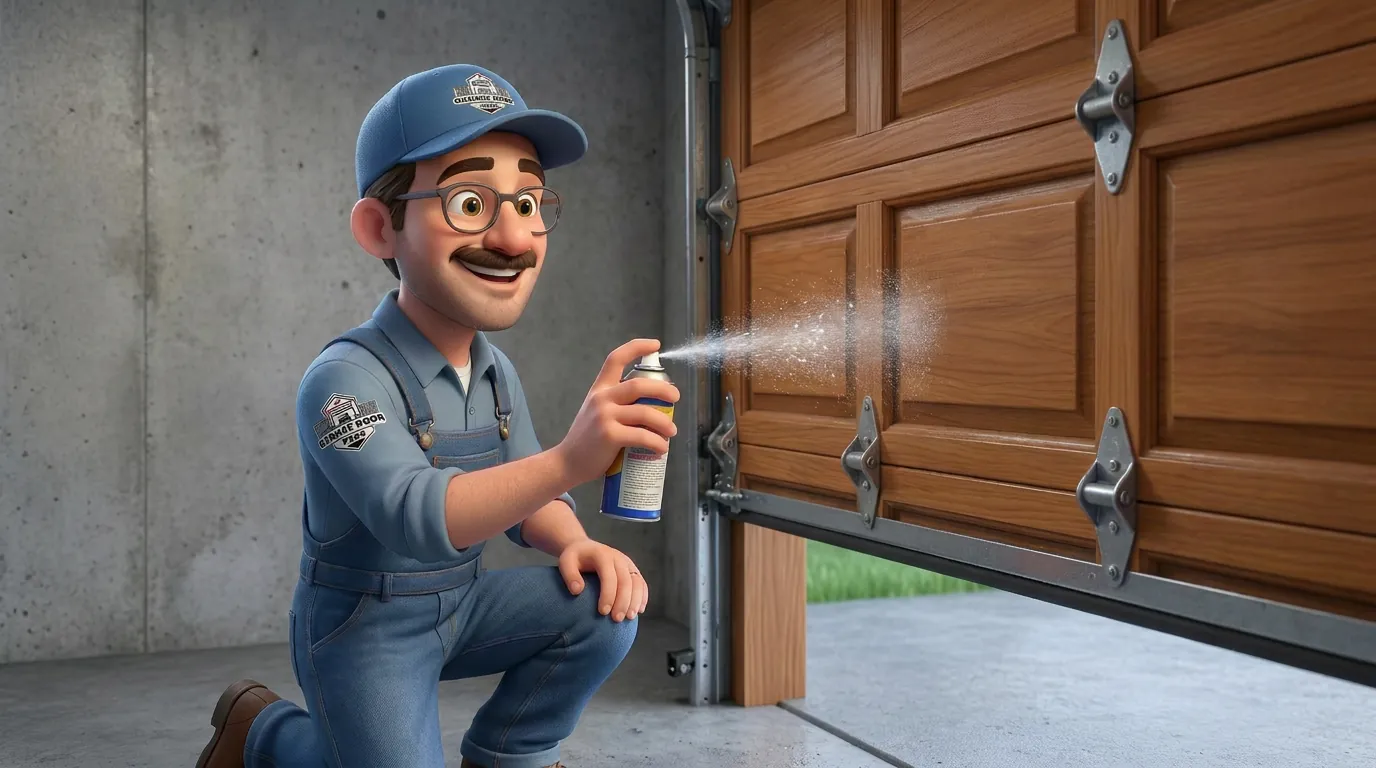
If you own a home in Abbotsford or anywhere in the Fraser Valley, you already know what the damp does to metal. That same constant moisture is quietly working on your garage door, washing lubricant off the rollers, creeping into the springs, and breeding rust on hardware that most homeowners never think to check. A few minutes of proper lubrication, done a few times a year, is the single cheapest thing you can do to keep the door quiet and add years to its life.
The short answer if you only remember one thing: use a garage door specific silicone spray or white lithium grease, never a thin oil and never WD-40 as a lubricant. The right product clings to metal and shrugs off moisture. The wrong one washes away in weeks or, in the case of WD-40, strips the grease you already had. Here is how to do it properly.
Why damp climates demand the right lubricant
In a dry climate, almost any lubricant lasts a while. In ours, thin oils and the wrong products get displaced by moisture and condensation within weeks, leaving bare metal to rust. That is why a door in Abbotsford needs both the right product and a more frequent schedule than the generic once-a-year advice you will find online.
The goal is two-fold: cut the friction that makes a door loud and slow, and put a moisture-resistant barrier between the damp air and the steel. Silicone and lithium-based products do both. They stay put, repel water, and do not gum up the way heavy greases or sticky oils can. Skip this and you invite the most common wet-climate failures we see, from rusted-through cables to seized rollers.
This is exactly the kind of work that good garage door maintenance builds a routine around. If you would rather not climb a ladder with a spray can every season, it is also one of the simplest jobs to hand off to a technician during an annual tune-up.
What to lubricate, and what to skip
Knowing where the lubricant goes matters as much as the product. The moving metal parts that rub against each other are what need it. The tracks do not.
Lubricate these parts:
- Rollers (the wheels that run in the track), especially metal ones
- Hinges where the door panels pivot
- Springs above the door (a light coat to prevent rust)
- Bearings and the bearing plates at the ends of the spring shaft
- The opener rail’s trolley, if the manufacturer recommends it
Leave these alone:
- The tracks themselves - wipe them clean instead, never grease them
- Nylon roller wheels’ plastic surfaces (lube the stems, not the plastic)
- Anything you would have to disassemble - that is a job for a pro
The most common mistake is greasing the tracks. The rollers are meant to roll along a clean track, and grease just traps grit that grinds the door rougher over time. If your tracks are dirty, a cloth and a little degreaser is the fix, not lubricant.
How to lubricate your garage door, step by step
Set aside about fifteen minutes. You will need a garage door silicone spray or white lithium grease, a rag, and a small stepladder. Work safely and never put hands near the springs or cables under tension.
- Close the door fully and unplug the opener so it cannot start while you work.
- Wipe the tracks clean with a dry rag to remove dust and old grime.
- Spray the hinges at each pivot point, then wipe away any drips.
- Lubricate the rollers, getting the spray into the small bearings where the wheel meets the stem. Avoid soaking the plastic on nylon rollers.
- Apply a light coat to the springs and the bearing plates above the door.
- Plug the opener back in and cycle the door a few times to work the lubricant in, then wipe off any excess.
That is it. A light, even coating is all you need. If the door is still rough or loud after this, the problem is mechanical, not dryness.
How often, and when to call a pro
In the Fraser Valley, aim to lubricate every three to four months rather than once a year. The damp simply works faster here. Tie it to the change of seasons so it is easy to remember, and pay extra attention heading into the wet fall and winter months when condensation is at its worst.
Some signs tell you lubrication alone will not cut it. Grinding, popping, or a loud bang means a worn roller, a loose bracket, or a spring or cable problem, none of which a spray can fixes. Rust that has already pitted the cables or sections needs a closer look before it fails, which is often how a small issue becomes an emergency repair. A door that has gone off its track from a seized roller is another job to leave to a technician rather than force, since running it in that state can bend the track or snap a cable.
Consider a pattern we see across the Fraser Valley every winter. A homeowner notices a faint squeal in October, ignores it through the wet months, and by February the door is grinding and dragging on one side because a roller rusted solid and started chewing into its track. A fifteen-minute lubrication back in the fall would have prevented the entire repair, and saved the cost of a new roller, a straightened track, and a service call. That is the real payoff of staying ahead of the damp rather than reacting to it.
If your door is past the point where a quick lubrication helps, the smart move is an inspection before it strands your car in the garage. for your Abbotsford home or call us at (778) 201-5640, and we will get it running smooth, quiet, and protected against the wet for the long haul.
Frequently Asked Questions
Can I use WD-40 to lubricate my garage door?
Not as a lubricant. WD-40 is a degreaser and water-displacer, so it actually strips away the grease your door needs and can leave parts drier than before. Use it only to clean off old gunk or free a seized part, then apply a proper silicone or lithium-based garage door lubricant.
What is the best lubricant for a garage door in a damp climate?
A garage door specific silicone spray or white lithium grease works best in Abbotsford's wet conditions. Both cling to metal and resist being washed away by moisture, unlike thin oils. Silicone spray is ideal for rollers and hinges, while lithium grease suits the springs and bearings.
How often should I lubricate my garage door in the Fraser Valley?
Every three to four months is a good rhythm here, more often than the once-a-year advice you will see online. Our constant damp accelerates rust and washes lubricant off faster, so quarterly care keeps the door quiet and the hardware protected.
Why is my garage door still noisy after lubricating it?
Persistent noise after lubrication usually points to a worn part rather than a dry one - a flat spot on a roller, a loose bracket, or a failing spring or bearing. Lubrication quiets friction noise, but grinding, popping, or banging sounds mean something needs inspection or replacement.
Should I lubricate the garage door tracks?
No. The rollers should glide along clean tracks, not through grease. Lubricating the tracks just collects dirt and grit, which makes the door rougher over time. Wipe the tracks clean instead, and save the lubricant for the rollers, hinges, springs, and bearings.
Can you over-lubricate a garage door?
Yes. Too much lubricant drips, attracts dust and debris, and can fling onto the door or floor. A light, even coating on the moving parts is all you need. Wipe away any excess so it does not build up into a grime-collecting mess.