How to Test and Adjust Your Garage Door's Balance in Hope, BC
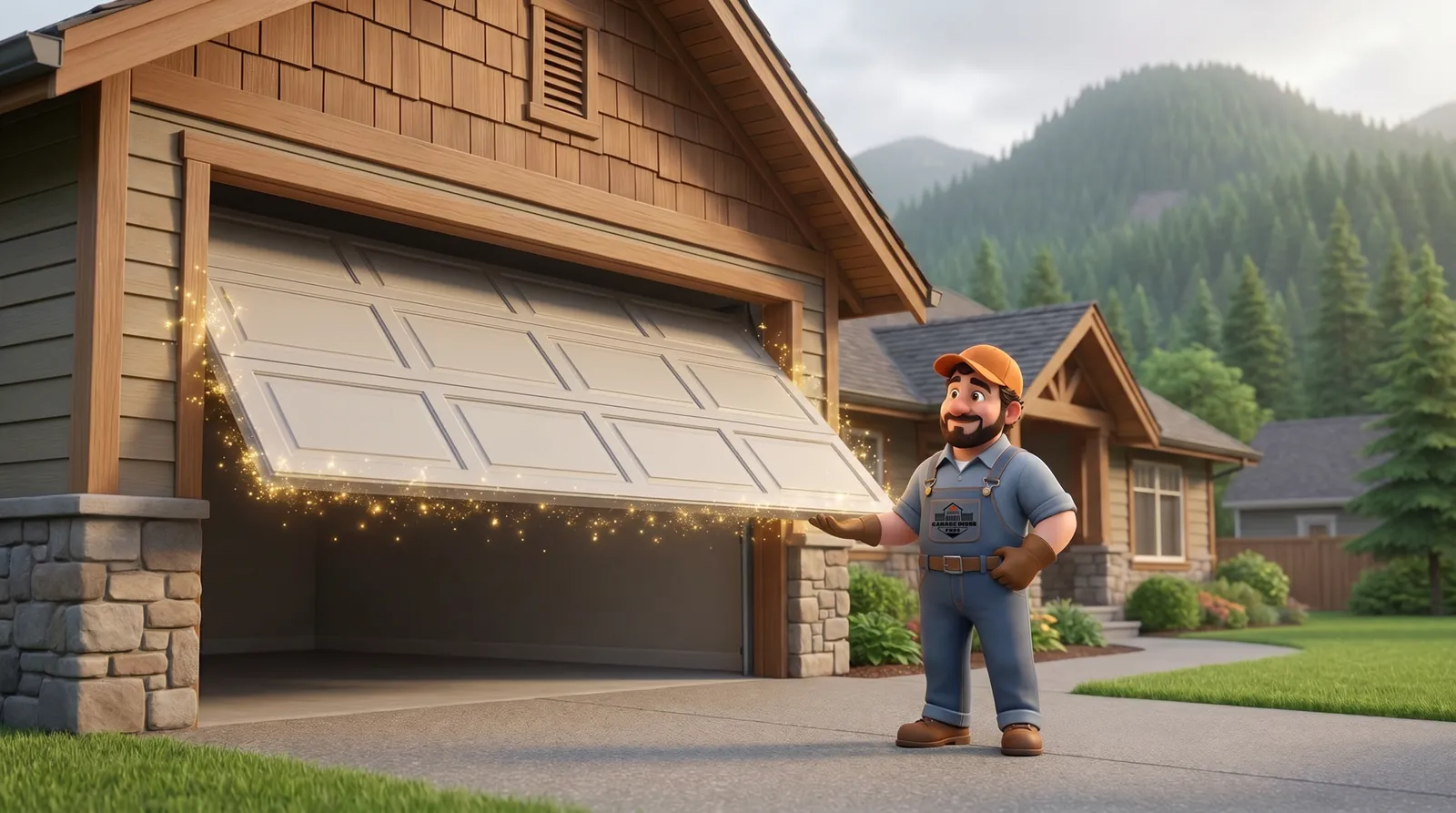
Of all the simple checks a homeowner can do on a garage door, the balance test is the one that pays off the most, and it takes about a minute. A door that is out of balance quietly destroys its own opener, strains the springs, and turns into a safety hazard, all while seeming to work fine from the driveway. For Hope homeowners, where a door gets a workout in every season, learning this one test is the easiest way to add years to your equipment. Here is how to do it, what the result tells you, and where the line is between a homeowner check and a job for a pro.
The short version: disconnect the opener, lift the door by hand to waist height, and let go. If it stays put, you are balanced. If it slams down or floats up, your springs need adjusting, and that adjustment is a professional job because springs under tension are genuinely dangerous. Let us walk through it.
Why balance matters
Your garage door is heavy, often 150 pounds or more, and the springs, not the opener, are what actually lift that weight. The opener is really just there to guide a properly balanced door up and down. When the springs are correctly tensioned, the door is nearly weightless in your hands, and the opener does easy work. That is the whole design.
When the balance drifts, everything changes. If the door is bottom-heavy, the opener has to drag the extra weight up on every cycle, working far harder than it was built to. That extra load causes the motor to overheat, the gears to wear, and the whole unit to fail years before it should. A top-heavy door, meanwhile, can fly open or be hard to keep closed. Either way, an unbalanced door is an opener-killer operating in slow motion.
There is a safety dimension too. A bottom-heavy door that is disconnected, or that fails while the opener is straining, can come down fast and hard. Keeping the door balanced is part of keeping it safe, which is one reason it belongs on every garage door maintenance checklist, not just as a comfort item but as a safety one.
The balance test, step by step
This is safe to do yourself and needs no tools. Run it with the door closed to start, and keep your hands clear of the springs and cables at all times.
- Close the door fully so it is all the way down.
- Pull the opener’s manual release cord (the red handle) to disconnect the door from the opener.
- Lift the door by hand to about waist or chest height, then stop.
- Gently let go and watch what happens.
- A balanced door stays roughly in place. If it drops or rises noticeably on its own, it is out of balance.
- Reconnect the door to the opener by running the opener once, and confirm it re-engages.
That is the entire test. A well-balanced door will hover, perhaps drifting a hair, but essentially staying where you left it. A door that slams to the floor is heavy on worn or under-tensioned springs; a door that shoots upward is over-tensioned. Both results mean the same next step.
What an unbalanced door is telling you
The direction of the failure points to the cause, but the fix is the same category of work. A door that drops is the more common result, and it usually means the springs have lost tension as they age, or one has weakened. Springs have a finite number of cycles in them, and in a busy household in Hope they get used hard, so gradual tension loss over the years is completely normal. The test simply reveals it before the opener pays the price.
A few related signs back up the test. If the door has started feeling heavier to lift, opens more slowly than it used to, or you can hear the opener straining and laboring on the way up, those all point to balance and spring tension. A visible gap in a torsion spring coil is the clearest tell of all, meaning a spring has actually broken. None of these should be ignored, because an overworked opener is living on borrowed time.
Catching this early is the difference between a minor adjustment and a bigger bill. An unbalanced door spotted during a routine check is a quick fix; the same door left alone burns out an opener and can snap a spring at the worst moment, which is how a simple tune-up becomes an emergency repair call instead.
Why spring adjustment is a job for a pro
Here is the firm line. Testing the balance is safe and smart for any homeowner. Adjusting the springs to fix it is not a DIY task, and we say that plainly because the alternative causes injuries every year. Torsion springs are wound to hold enormous tension, and adjusting them requires proper winding bars, the right technique, and experience. A slip, a wrong tool, or a worn spring letting go can break bones or worse. This is the one part of the door where the advice is unambiguous: leave it to a trained technician.
Consider a typical Hope scenario. A homeowner runs the balance test in late summer and finds the door drops quickly when released, and they have noticed the opener groaning lately. Nothing has broken yet. Booking a spring adjustment then, on their own schedule, is a quick, affordable fix that saves the opener. The alternative, ignoring it until a spring snaps on a cold morning with a car trapped inside, costs far more and never happens at a convenient time.
If your balance test came back wrong, or the door is feeling heavy and the opener is straining, that is the cue to bring in help before it turns into a breakdown. for garage door maintenance in Hope, call (778) 201-5640, or , and we will get the balance right, protect your opener, and handle the springs safely so you do not have to.
Frequently Asked Questions
How do I test if my garage door is balanced?
Close the door, pull the opener's manual release cord to disconnect it, then lift the door by hand to about waist height and let go. A balanced door stays roughly where you leave it. If it slams down or rises on its own, the springs are out of adjustment and the door is unbalanced.
Why does my garage door slam shut when I let go of it?
A door that drops fast when released is heavy on the springs, meaning the spring tension is too low or the springs are losing strength. The opener then has to fight that extra weight on every close, which wears it out early. An unbalanced, bottom-heavy door is also a safety risk and should be adjusted by a professional.
Can I adjust my garage door spring tension myself?
It is strongly discouraged. Torsion and extension springs store enormous energy, and adjusting them with the wrong tools or technique causes serious injuries every year. Balance testing is safe for homeowners, but the actual spring adjustment should be left to a trained technician with the proper winding bars and experience.
How often should I check my garage door balance?
Checking a couple of times a year is sensible, and any time you notice the door feeling heavier, opening slower, or the opener straining. Springs lose tension gradually over thousands of cycles, so a routine check catches the drift before it overworks the opener or leads to a failure.
What does it cost to balance a garage door?
Balancing is usually a modest service, often bundled with a tune-up, when it is a matter of adjusting spring tension. If the springs are worn out or broken, the cost is the spring replacement itself rather than a simple adjustment. A technician can tell you which after a quick inspection.
Will an unbalanced garage door damage my opener?
Yes, over time. The opener is sized to move a balanced door that the springs do most of the work lifting. When the door is unbalanced, the motor carries weight it was not designed for on every cycle, which leads to premature wear, overheating, and a shorter opener lifespan. Fixing the balance protects the opener.