Garage Door Stuck Halfway? Why It Stops and What to Do
The Short Answer
A garage door that stops halfway is usually telling you one of four things: something is blocking or binding in the track, a spring or cable has failed and the opener cannot lift the weight, the safety sensors are blocked or out of line, or the opener’s force and travel settings need adjusting. The first thing to do is the same in every case: stop pressing the button, keep everyone out from under the door, and work out which of the four you are dealing with before touching anything else.
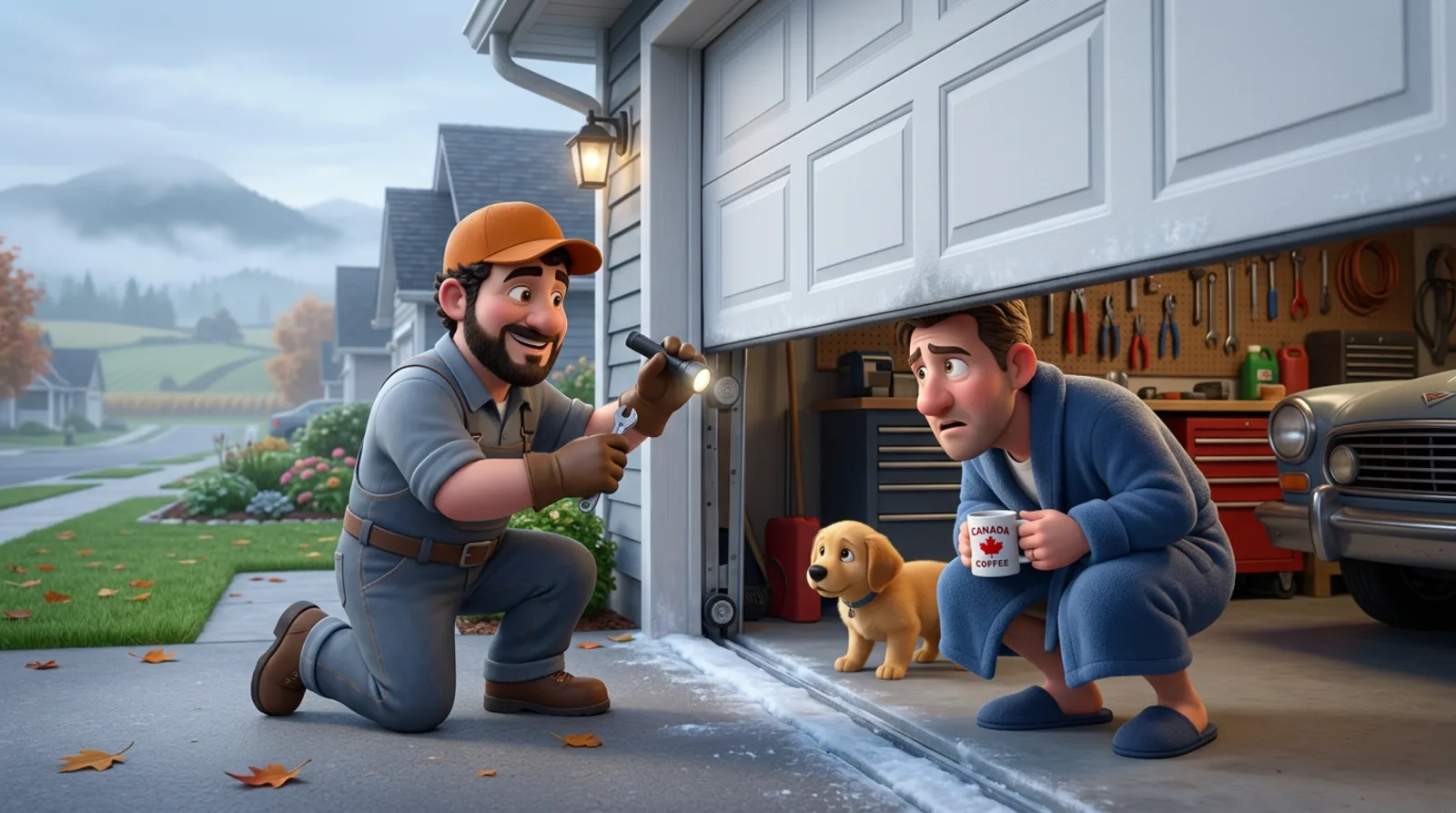
A door stuck halfway is one of the more unsettling garage problems because it is neither open nor closed. You cannot get the car out, you cannot lock up, and the door is hanging at head height. The good news is that most causes are diagnosable in a few minutes of careful looking.
First, make it safe
Before you investigate, take these steps:
- Stop operating the opener. Repeated attempts can pull a damaged door further out of its tracks or burn out the opener.
- Keep everyone clear. Nobody walks or drives under a door that has stopped partway. It may be held by a single cable.
- Do not pull the emergency release yet. If a spring or cable has failed, releasing the door from the opener can let it drop. Only use the release once you have ruled out spring and cable problems.
- Do not force it. Pushing or pulling a stuck door is how a roller problem becomes a bent track or a snapped cable.
Cause 1: Something in the track
Rollers ride in steel tracks on each side of the door. If a roller is cracked, seized with rust, or has popped partly out of the track, the door hits that spot and stops. Debris, a bent section of track, or a loose track bracket does the same.
What to look for: Stand to the side and look along both tracks. A roller sitting at an angle, a dent or kink in the track, or a gap between the track and the wall bracket at the height where the door stopped points to this cause. In damp garages, rust-seized rollers are a frequent culprit.
What to do: Leave the door where it is. Bent tracks and rollers out of the track need the door stabilized and realigned, which is a job for a technician. Our guide to what to do when a garage door is off track explains why forcing it makes things worse.
Cause 2: A broken spring or cable
The springs carry almost all of the door’s weight. When one breaks, the opener suddenly has to lift a door that can weigh 70 to 135 kg. Most openers detect the extra strain and stop or reverse partway as a safety feature. A frayed or snapped lifting cable causes a similar stall and usually leaves the door hanging crooked.
What to look for: Look at the torsion spring above the door. A gap of a few centimetres in the coil means it has broken. Check the cables on each side for fraying or slack. A loud bang shortly before the problem started is another clue.
What to do: Do not use the opener or the emergency release. Keep the area clear and call for repair. Spring replacement typically runs $200 to $400 and cable replacement $150 to $250. Our spring replacement cost guide explains what affects the price.
Cause 3: Safety sensors
The two small photo-eye sensors near the bottom of the tracks stop a closing door if anything breaks the beam between them. If a sensor is dirty, knocked out of line, or has a loose wire, the opener may stop the door partway down and send it back up. This cause usually shows up on closing, not opening.
What to look for: Check the small lights on each sensor. Steady lights generally mean they can see each other; a blinking or off light means they cannot. Look for a spider web, leaves, a bin, or a sensor bracket that has been bumped.
What to do: Clean the lenses with a soft cloth, remove anything in the beam, and gently realign the sensor until its light is steady. This is a safe, quick check. Our article on why a garage door reverses before closing walks through it in detail.
Cause 4: Opener force and travel settings
Openers have limit settings that tell them where “fully open” and “fully closed” are, and force settings that control how hard they push before deciding something is wrong. If the limits drift or the force is set too sensitively, the door can stop short. Cold weather, which stiffens lubricant and makes the door harder to move, often brings this cause to the surface in the fall.
What to look for: A door that stops at the same point every time, with springs, cables, tracks, and sensors all looking normal, often points to settings. A door that has recently become stiff or heavy can also trigger the force limit.
What to do: Opener settings are adjustable, but they work hand in hand with door balance. Raising the force to push past a binding door hides a real problem and removes a safety margin. Have the door’s balance checked first; a properly balanced door rarely needs more force.
Quick diagnosis table
| What you notice | Most likely cause | DIY or call? |
|---|---|---|
| Gap in the spring coil, loud bang earlier | Broken spring | Call - do not operate |
| Door hangs crooked, cable slack or frayed | Broken or slipped cable | Call - do not operate |
| Roller angled or out of track, dented track | Track or roller problem | Call |
| Stops and reverses only when closing, sensor light blinking | Sensors blocked or misaligned | Safe to check and clean |
| Stops at the same spot, everything else looks normal | Opener limits or force | Call for adjustment and balance check |
Stuck doors in Abbotsford’s damp climate
Abbotsford’s long wet season is hard on the parts that cause a stuck door. Moisture works into roller bearings until they seize, pools at the base of tracks where it rusts the steel, and settles in spring coils, shortening their life. Morning fog and cold snaps in late fall also stiffen old grease, so a door that ran fine in August starts to stall in November.
The fix is mostly prevention. Sealed nylon rollers do not rust the way old steel rollers do, a garage door lubricant (not heavy grease) keeps moving parts free in cold damp weather, and an annual check catches rusting cables and tired springs before they leave the door hanging. If your door is already stuck, garage door repair in Abbotsford covers springs, cables, rollers, and tracks, and our older guide to why garage doors get stuck covers more general causes.
Get it moving safely
If the sensors check out and the door is still stuck, or you see any sign of a broken spring or cable, leave it where it is and get help. , call (778) 201-5640, or . If the door is stuck open overnight and you are worried about security or rain getting in, Midnight Rescue is available around the clock across the Lower Mainland.
Frequently Asked Questions
Why does my garage door stop halfway?
The most common causes are an obstruction or damaged roller in the track, a broken spring or cable that leaves the opener lifting too much weight, safety sensors that are blocked or misaligned, and opener force or travel-limit settings that are out of adjustment. Cold, gummed-up lubricant and bent tracks can also make a door bind partway.
Is it safe to leave a garage door stuck halfway?
Only if nobody goes near it. A door stuck halfway may be held up by a single cable or a damaged roller and can drop without warning. Keep people, pets, and vehicles out from under it, do not try to force it up or down, and get it assessed as soon as possible.
Can a broken spring make a garage door stop halfway?
Yes. When a spring breaks, the opener has to lift the full weight of the door. Many openers sense the extra load and stop or reverse partway up as a safety measure. A gap in a torsion spring coil or a door that feels very heavy is a strong sign this is the cause.
Should I pull the emergency release if my door is stuck halfway?
Not if you suspect a broken spring or cable. The release disconnects the door from the opener, and if the springs are not holding the door's weight, it can drop suddenly. Only use the release when the door is fully closed or you are confident the springs and cables are intact.
Why does my garage door stop halfway when closing but not opening?
A door that stops or reverses on the way down usually points to the safety sensors, an obstruction near the floor, or a close-force setting that is too sensitive. Check that both sensor lights are steady, the lenses are clean, and nothing is in the beam, then test again.
How much does it cost to fix a garage door stuck halfway?
It depends on the cause. Cleaning or realigning sensors and adjusting opener settings is a minor repair, often from around $100 to $150. A broken spring typically runs $200 to $400, and a cable $150 to $250. A technician confirms the cause before quoting.