Why Your Garage Door Reverses Before Closing: A Chilliwack Sensor Fix
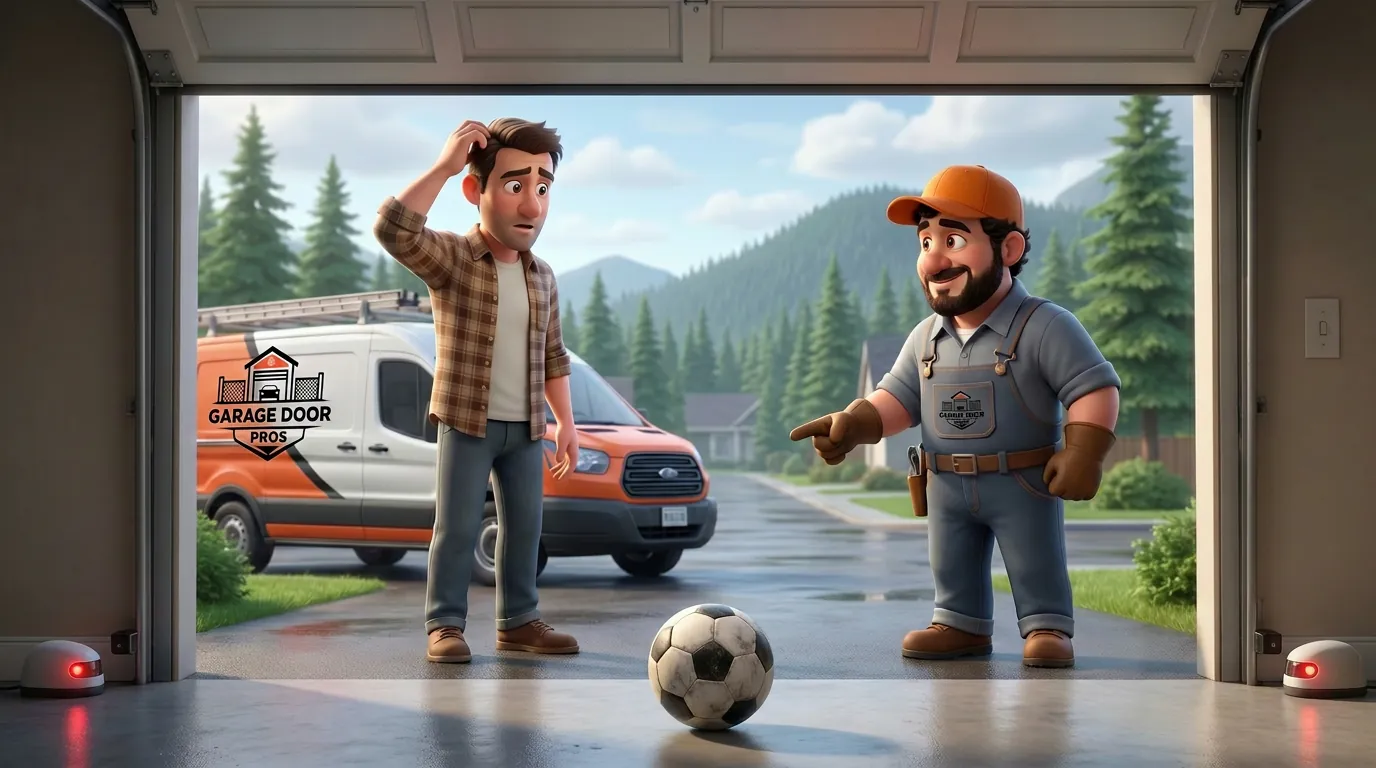
Few garage door problems are as maddening as one that will not stay shut. You press the button, the door starts down, and just before it seals it changes its mind and rolls back up. In a Chilliwack winter that means a garage open to the rain and cold until you sort it out. The good news is that this exact behaviour usually has one simple cause, and you can often fix it yourself in under ten minutes.
Here is the short answer: about nine times out of ten, a door that reverses before closing is being stopped by its own photo-eye safety sensors. These are the two small units mounted near the floor on each side of the door. When they fall out of alignment, get dirty, or catch the sun, the opener assumes something is in the way and reverses for safety. Let us walk through how the system works, then the fixes.
How the safety reversal system works
Every garage door opener built since the early 1990s has a photo-eye safety system, required by law after too many accidents with closing doors. Two sensors sit about six inches off the ground, one on each side of the door. One sends an invisible infrared beam across the opening, and the other receives it. As long as that beam is unbroken, the door is allowed to close.
The moment something breaks the beam, a bag of groceries, a pet, a child, or even a stray cobweb, the opener reverses the door immediately. That is the system doing exactly its job. The catch is that the sensors cannot tell the difference between a real obstruction and a beam that simply is not reaching the other side because the sensors are pointed slightly wrong or their lenses are grimy.
This is why the reversal almost always traces back to the sensors rather than the motor. The opener itself is working perfectly; it is being told, falsely, that the doorway is blocked. Understanding that one fact turns a mysterious fault into a quick, logical fix, and it is the first thing a technician checks on any garage door repair call for a door that will not close.
The sensor fixes you can do
Before anything else, look at the sensors. Most have a small indicator light: one LED is usually steady to show power, and the other tells you whether the beam is connecting. Work through these steps in order.
- Clean both lenses with a soft, dry cloth. Dust, spider webs, and road grime are the most common culprits in our damp climate.
- Check for obstructions in the beam path, including a bin, a bike, or a coiled hose sitting just inside the doorway.
- Look at the alignment LEDs. If one is blinking, the sensors are not seeing each other.
- Loosen the wing nut on each bracket and gently adjust the angle until both LEDs glow steady, then retighten.
- Test the door. If it now closes with a normal press of the button, you are done.
If the LEDs will not go steady no matter how you aim them, gently nudge the brackets, since a bumped sensor is a frequent cause. A door that gets bumped by a car or a ladder can knock a sensor just enough to break the beam without any visible damage.
When it is not the sensors
Sometimes the sensors are spotless and aligned and the door still reverses. At that point the cause is elsewhere, and the fixes get more technical. Worn or pinched sensor wiring can interrupt the beam intermittently, which produces a maddening on-again, off-again fault. Direct sunlight hitting a lens at certain times of day can wash out the beam, so a problem that only happens in the early morning often points to the sun rather than the hardware.
The door’s own settings matter too. If the close-force or travel limits are set wrong, the opener can sense resistance partway down, such as a roller dragging in a rough or rusted track, and interpret it as an obstruction. In that case the real problem is mechanical, and forcing the settings only masks it. A door that is also noisy, slow, or uneven is telling you the issue runs deeper than the sensors, and ignoring it is how a small fault turns into an off-track door or a snapped cable.
Our climate adds one more twist. On cold, damp mornings, condensation can fog a sensor lens just enough to scatter the beam, so a door that reverses only on the first cycle of a wet morning and behaves the rest of the day may simply have a foggy eye. A quick wipe before you leave usually settles it, and it is a clue worth mentioning to a technician if the fault comes and goes rather than staying constant.
Keeping the tracks clean and the hardware lubricated heads off a lot of these false reversals, which is one more reason regular garage door maintenance pays off in a wet climate like ours.
When to call a pro in Chilliwack
If you have cleaned and realigned the sensors and the door still will not close, or it reverses with a clear doorway and steady LEDs, it is time for a proper diagnosis. Wiring faults, a failing logic board, and mis-set force limits are not guesswork jobs, and a door left only half-working is both a security gap and a safety risk if you resort to holding the wall button to force it down.
Consider a recent example. A homeowner in Chilliwack spent a week holding the wall button to get their door closed each night, assuming the opener was dying. The sensors looked fine, but a rodent had nicked the sensor wire behind the track over the winter, breaking the beam at random. A few minutes of testing found it, and a simple wire repair restored the safety system, no new opener required.
If your door is stuck in the reverse-and-rise loop and the sensor basics have not solved it, we can pinpoint the real cause fast. in Chilliwack or call us at (778) 201-5640, and we will get your door closing safely again, without disabling the very system that keeps it safe.
Frequently Asked Questions
Why does my garage door go back up before it closes?
Nine times out of ten it is the photo-eye safety sensors near the floor. If they are misaligned, dirty, or blocked, the opener thinks something is in the doorway and reverses the door for safety. Cleaning and realigning the two sensors so they face each other usually fixes it in a few minutes.
How do I realign my garage door safety sensors?
Loosen the wing nut on each sensor bracket, then adjust the angle so both sensors point directly at each other. Most have a small LED that glows steady when they are aligned and blinks when they are not. Tighten the brackets once both LEDs are solid, then test the door.
Can sunlight cause my garage door to reverse?
Yes. Direct sun shining into a sensor's lens can wash out the beam and trigger a false reversal, which is most common in the early morning or late evening. A small sun shield or repositioning the sensor slightly usually solves it. If it only happens at certain times of day, sunlight is the likely culprit.
Why does my garage door close if I hold the wall button?
Holding the wall button overrides the safety sensors and forces the door down. That confirms the problem is the sensors, not the motor or door. It is fine as a one-time workaround to get the door closed, but never leave a door that only closes this way, since the safety reversal is disabled.
Is it safe to bypass my garage door sensors?
No, not as a permanent fix. The sensors are what stop the door from closing on a child, pet, or car. Bypassing them removes that protection and is unsafe and, in many places, against code. If the sensors keep failing, replace them rather than disable them.
When should I call a professional for a reversing garage door?
If cleaning and realigning the sensors does not fix it, or the door reverses with no obstruction and clear sensors, the issue may be the wiring, the logic board, or the door's travel and force settings. Those are worth a professional diagnosis rather than guesswork, especially if the door is also noisy or rough.