Steel vs. Aluminum vs. Wood: Which Garage Door Survives Vancouver's Rain?
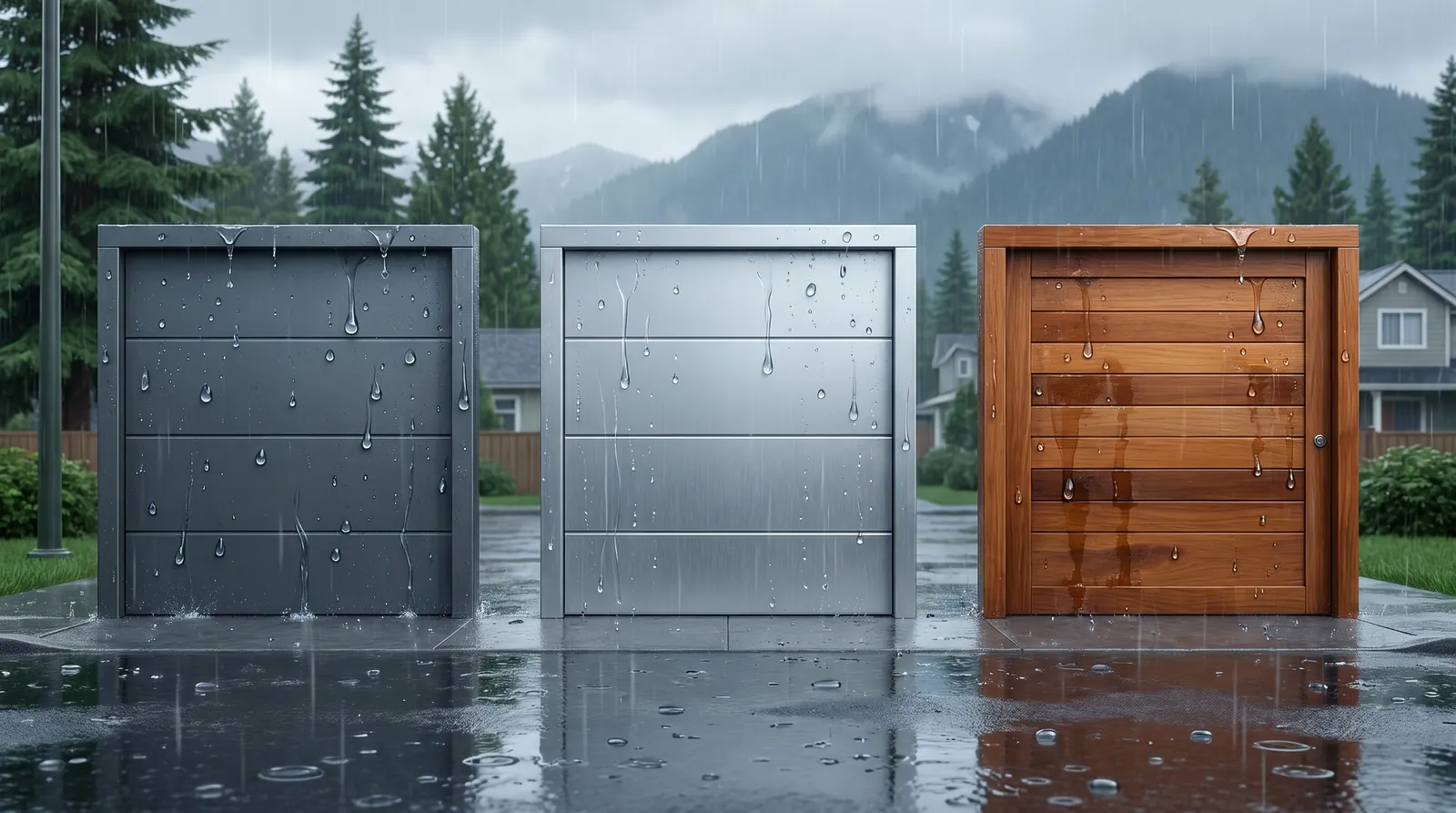
If you own a home anywhere in the Lower Mainland, your garage door fights the weather every single day. Vancouver sees close to 1,900 mm of rain a year, and that constant damp, plus salt-tinged air closer to the coast, is hard on the largest moving part of your house. The material you choose is not a cosmetic decision here. It decides whether your door is still smooth and solid in twenty years or rusting, warping, and sticking in five.
Here is the short answer before we dig in. For most Vancouver-area homes, an insulated steel door is the best all-round choice on cost, durability, and upkeep. Aluminum is the smart pick if you want a rust-proof, low-maintenance door or a modern full-view glass look. Wood delivers unbeatable curb appeal but asks for real, ongoing maintenance to survive our climate. The rest of this guide explains why, so you can match the material to your home and budget.
How Vancouver’s wet climate tests a garage door
Our climate is mild but relentless. We rarely get the deep freeze-thaw cycles that crack materials in the Prairies, but we get months of moisture, high humidity, and wind-driven rain. Water finds every seam, every scratch, and every unsealed edge. Over time that is what separates a door that ages gracefully from one that fails early.
Three things do the damage here. Standing moisture corrodes exposed metal and rots untreated wood. Humidity keeps hardware damp long enough to rust springs, cables, and rollers from the inside out. And condensation, especially in attached garages, coats the inside of a thin uninsulated door in beads of water that drip onto everything below. A material that shrugs all of this off is worth more than one that simply looks good on installation day.
This is also why professional garage door installation matters as much as the door itself. Even the best material fails fast if it is hung with bare-steel hardware or sealed badly at the bottom. The right spec for our region means galvanized parts, moisture-rated seals, and a proper threshold, regardless of which face material you choose.
Steel: the Lower Mainland workhorse
Steel is the default for a reason. A good steel door is galvanized and wears a baked-on factory finish, so the surface resists corrosion as long as that coating stays intact. Most quality steel doors are also available as insulated units, with a layer of foam sandwiched between two steel skins. That construction is more rigid, far more dent-resistant, and noticeably quieter than a single thin sheet.
The trade-offs are honest and manageable. Bare steel will rust if a deep scratch or dent exposes it, so chips need a quick dab of touch-up paint, and a door that gets bumped by a basketball or a bumper can dent. Neither is a dealbreaker. Keep the finish intact, keep the moving parts lubricated, and steel handles our coast comfortably for 20 to 30 years.
On price, an insulated steel door installed typically runs in the range of $1,800 to $3,500 depending on size, insulation level, and finish. That is the most value per dollar of any option here, which is why it anchors most of the installations we do in Vancouver. For the majority of homeowners reading this, steel is the right starting point.
Aluminum: rust-proof, with trade-offs
Aluminum solves the one thing steel cannot promise: it will never rust. That makes it genuinely appealing on the coast and for homes near the water, where salt air accelerates corrosion. Aluminum is also light, which is easy on the opener and the springs, and it is the material behind those sleek full-view doors with large glass panels that suit modern architecture.
The compromises are real, though. Aluminum is softer than steel, so it dents more easily from impacts. Frames and glass push the price up, and a thin non-insulated aluminum door offers little against condensation or noise. If you love the contemporary look or you are right on the water, aluminum earns its keep. If you just want a tough, affordable door, steel is usually the better buy.
Expect a quality aluminum or aluminum-and-glass door to land somewhere in the range of $3,000 to $6,000 or more installed, with full-view glass doors at the top end. You are paying for the rust immunity and the look, not for raw strength, so go in clear about what you are buying.
Wood: beautiful and demanding
Nothing matches the warmth of a real wood or cedar door. On a craftsman or heritage home it can lift the entire street-facing facade. If curb appeal is the priority and the budget is there, wood is the most beautiful option by a wide margin, and a well-built wood door can last for decades.
The catch is the maintenance, and in our climate it is not optional. Wood absorbs moisture, so it needs to be sealed or refinished every two to four years to keep water out. Let that slide and you invite rot, warping, and peeling, sometimes within just a few years. A wood door is a commitment, not a set-and-forget purchase.
Plan for both a higher purchase price, commonly $4,000 to $10,000 or more installed for solid wood, and ongoing upkeep. That upkeep is where services like garage door maintenance and periodic repainting and refinishing come in. If you are ready to keep up with it, wood rewards you. If not, a faux-wood steel door gives you much of the look with a fraction of the work.
Side-by-side: which material wins for your home
Every material here can be the right answer. It depends on what you value most: lowest cost, zero maintenance, or premium looks. This table sums up how the three compare for a Lower Mainland home.
| Material | Rust / rot resistance | Maintenance | Insulation options | Look | Cost installed | Best for |
|---|---|---|---|---|---|---|
| Steel | Good (if finish intact) | Low | Excellent | Clean, versatile | $1,800 - $3,500 | Most homes; best value |
| Aluminum | Excellent (no rust) | Very low | Limited / framed | Modern, glass | $3,000 - $6,000+ | Coastal, contemporary |
| Wood | Poor without upkeep | High | Varies | Premium, warm | $4,000 - $10,000+ | Curb appeal, heritage homes |
A few quick rules of thumb fall out of that comparison:
- Want the best balance of price, durability, and low upkeep: choose insulated steel.
- Live near the water or want a full-view glass door: choose aluminum.
- Want a showpiece and will keep up the refinishing: choose wood.
- Love the wood look but not the work: choose a faux-wood steel door.
Our take for Lower Mainland homes
For most of the homeowners we work with, the recommendation is straightforward: an insulated steel door, specced with galvanized hardware and moisture-rated seals, hits the sweet spot of cost, longevity, and low maintenance in our climate. It is the door we install most often precisely because it holds up so well to coastal rain without demanding much in return.
Picture a typical scenario. A homeowner in East Vancouver with an attached garage and a bedroom above it is choosing between a budget single-skin steel door and a mid-range insulated one. The insulated door costs a few hundred dollars more, but it cuts the condensation that was dripping onto their stored gear, quiets the door under the bedroom, and resists the inevitable bumps far better. Over a 25-year life, that small upgrade is the easy call.
If you are weighing materials for your own home, the best next step is an on-site look at your garage, your exposure, and how you use the space. We can also handle the repairs if your current door just needs new seals or a section rather than a full replacement. Ready to talk options and get a written quote? or call us at (778) 201-5640, and we will help you pick the door that lasts in our rain, not just the one that looks good in the showroom.
Frequently Asked Questions
What is the best garage door material for Vancouver's rainy climate?
For most homes, an insulated galvanized steel door is the best all-round choice. It resists corrosion when the finish is intact, costs less than wood, and handles our damp, mild winters well. Aluminum is the better pick if you want a rust-proof, low-maintenance door or a full-view glass look, while wood suits homeowners who want premium curb appeal and will commit to regular refinishing.
Do steel garage doors rust on the BC coast?
Quality steel doors are galvanized and factory-finished, so they resist rust as long as the coating is not broken. The weak points are deep scratches and dents that expose bare metal, plus the hardware. Touch up chips promptly and keep the rollers, hinges, and springs lubricated, and a good steel door will go 20 to 30 years here.
How long does a wood garage door last in the Lower Mainland?
With diligent upkeep, a real wood door can last decades, but in our wet climate it needs refinishing every two to four years to prevent moisture getting in. Skip that and rot, warping, and peeling can set in within a handful of years. Budget for the maintenance before you buy.
Is an insulated garage door worth it in mild Vancouver winters?
Yes, for two reasons that matter more than heat retention here. Insulated doors have a steel-foam-steel sandwich that is far more rigid and dent-resistant, and they cut condensation and noise. If your garage is attached or has a room above, insulation is an easy upgrade to justify.
Which garage door material is the cheapest long-term?
Insulated steel usually wins on total cost of ownership. Aluminum costs more upfront but needs almost no maintenance, so it can catch up over a long ownership. Wood has both the highest purchase price and the highest ongoing upkeep cost, so it is the most expensive to own over time.
Can you replace just one material's weak points instead of the whole door?
Often yes. A dented steel panel, a rusted bottom section, or worn weather seals can be repaired or replaced without a full new door. Whether that is worth it depends on the door's age and overall condition, which is exactly what an on-site assessment is for.