Going Away This Summer? How to Secure Your Langley Garage Before Vacation
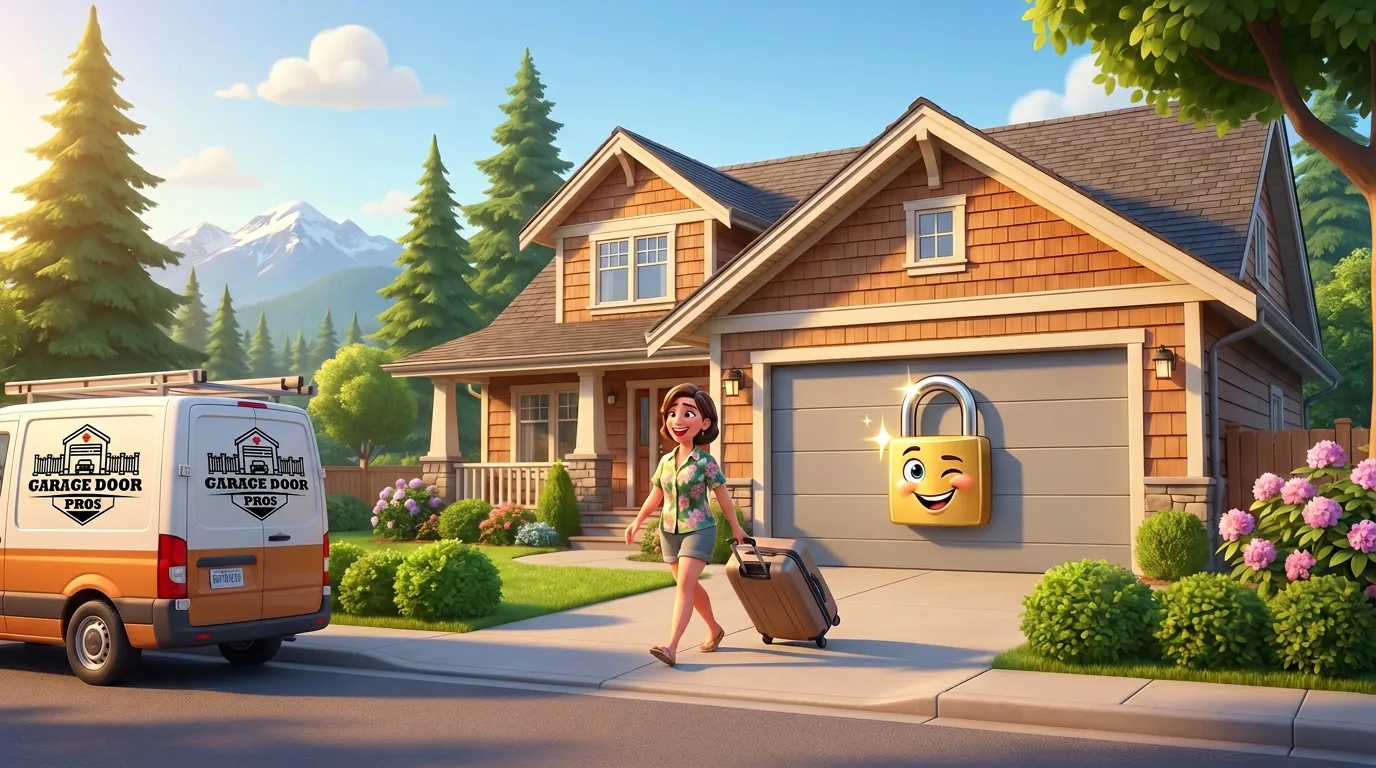
The front door gets a deadbolt, the windows get checked, the lights go on timers. Then everyone forgets the biggest door on the house. For a lot of Langley homes the garage is the real soft spot when you head off on a summer trip, and burglars know it. A garage door is large, often older than the rest of the home’s security, and frequently connected straight into the house through an unlocked interior door.
The good news is that locking it down takes about ten minutes and no special gear. Run through the checklist below before you leave, and the most-overlooked entrance to your home becomes one of the most secure. Here is exactly what to do.
Why the garage is a break-in soft spot
A garage offers a burglar three things they love: cover, time, and tools. Once the door is up, they are working out of sight of the street, often with your own ladders and pry bars within reach. And the interior door from the garage into the house is regularly left unlocked, because who locks a door inside their own home?
Older openers make it worse. A fixed-code unit from the early 2000s or before can be defeated with a cheap code-grabbing device that captures your remote’s signal and replays it. Even the emergency-release cord, the red handle that lets you open the door manually in a power cut, can be tripped from outside on some doors with nothing more than a coat hanger through the top gap.
None of this means you need a fortress. It means the garage deserves the same deliberate attention as your front door before a trip. A quick look at your opener’s age and features, the kind of thing we check during a garage door opener service, tells you which of these risks actually apply to your setup.
Your pre-vacation garage security checklist
Work through these before you leave. Most take a minute and none cost anything.
- Enable vacation mode on the wall control panel, which disables all remotes and keypads while you are gone.
- If there is no vacation mode, unplug the opener so no remote can trigger it.
- Engage the manual slide lock on the door track for a physical second layer.
- Lock the interior door between the garage and the house, every time, trip or not.
- Cover or frost the garage windows so no one can see whether your cars are gone.
- Take the remote out of any car parked in the driveway - a remote in a visible car is a key to your house.
- Tidy away ladders and tools that could be used to force or climb the door.
That sequence closes the obvious gaps: remote access, physical entry, and the visual cues that tell a stranger the house is empty. Done together, they make the garage a genuinely hard target rather than the easy one it usually is.
One item on that list deserves a second mention: the interior door between the garage and the house. It is the one most people never lock, yet it is the last barrier if someone does get into the garage. Treat it like an exterior door, with a deadbolt and the habit of locking it behind you, and even a breached garage does not become a breached home. The same logic applies to whatever you store in the garage itself, from bikes to power tools, which is worth moving out of sight before a long absence so it is not on display through a window.
Smart openers and alerts while you’re away
If you have a Wi-Fi-enabled opener, your phone becomes a security guard. You can confirm the door is closed from the airport, get an alert the moment it opens, and close it remotely if a house-sitter or family member leaves it up. For peace of mind on a long trip, that real-time visibility is hard to beat.
Smart openers also pair well with the rest of a connected home. Tie the garage into a camera or alarm system and an unexpected door movement can trigger a notification and a recording at once. If you do not have a smart opener yet, a retrofit module can often add phone control to an existing unit, and it is a popular upgrade precisely because it earns its keep every time you travel.
Picture a two-week trip as an example. A neighbour stops by to water the plants and forgets to lower the door on the way out. Without phone control, it sits wide open until someone happens to notice, sometimes for days. With a smart opener, you get an alert within minutes, tap once to close it from wherever you are, and the problem is solved before it becomes an invitation. That single save is why so many travellers add phone control before a long absence, and why it tops our list for anyone who leaves home empty for more than a weekend.
One caution: a smart opener is only as secure as the account behind it. Use a strong, unique password and enable two-factor authentication if it is offered, so the convenience does not become its own vulnerability.
A quick word for Langley homeowners
Summer is peak travel season and, not coincidentally, a busier season for opportunistic break-ins across the Langley area. The homes that get skipped are the ones that show no easy way in and no clear sign that the owners are gone. Your garage is usually the deciding factor in both.
Picture a typical scenario. A Langley family leaves for two weeks with the front of the house buttoned up but the garage on an old fixed-code opener, a remote sitting in the car in the driveway, and clear glass panels showing the empty bays. Any one of those is an invitation. Flip on vacation mode, pull the remote, frost the glass, and the same house becomes a non-starter for a would-be intruder.
If your opener is aging, or you want rolling-code security and remote alerts before your next trip, it is worth a quick look. We can upgrade an old unit, swap a vulnerable remote, or handle any repairs the door needs. for garage door installation in Langley or call (778) 201-5640, and travel knowing the biggest door on your house is locked down tight.
Frequently Asked Questions
What is vacation mode on a garage door opener?
Vacation mode is a lock setting, usually a switch on the wall control panel, that disables all remotes and keypads while you are away. Even if someone has a copied or stolen remote code, the door will not respond. It is one of the simplest and most effective things to enable before a trip.
Should I unplug my garage door opener when I go on vacation?
Unplugging the opener is a solid backup if your unit has no vacation mode. With the opener powered down, no remote can open the door. Pair it with the manual slide lock on the door track for physical security, and you have two independent layers protecting the entry.
Can someone hack or copy my garage door remote?
Older fixed-code openers can be vulnerable to code-grabbing devices that capture and replay your signal. Modern rolling-code openers change the code every use, which closes that gap. If your opener predates the mid-2000s, that is a reason to upgrade, and to use vacation mode while you travel.
Should I cover my garage windows before a trip?
Yes. Frosted film or a simple covering stops anyone from peeking in to see whether your cars are gone or what is worth taking. An empty garage is a clear signal that nobody is home, so removing that visual cue is an easy, cheap deterrent.
What happens to my garage door if the power fails while I'm away?
Without battery backup, a powered-down opener simply keeps the door closed, which is fine for security. The concern is the reverse: an opener left active during an outage may behave unpredictably when power returns. Vacation mode or unplugging avoids surprises, and a battery-backup unit keeps things controlled.