Rolling-Code vs. Fixed-Code Remotes: A Maple Ridge Security Guide
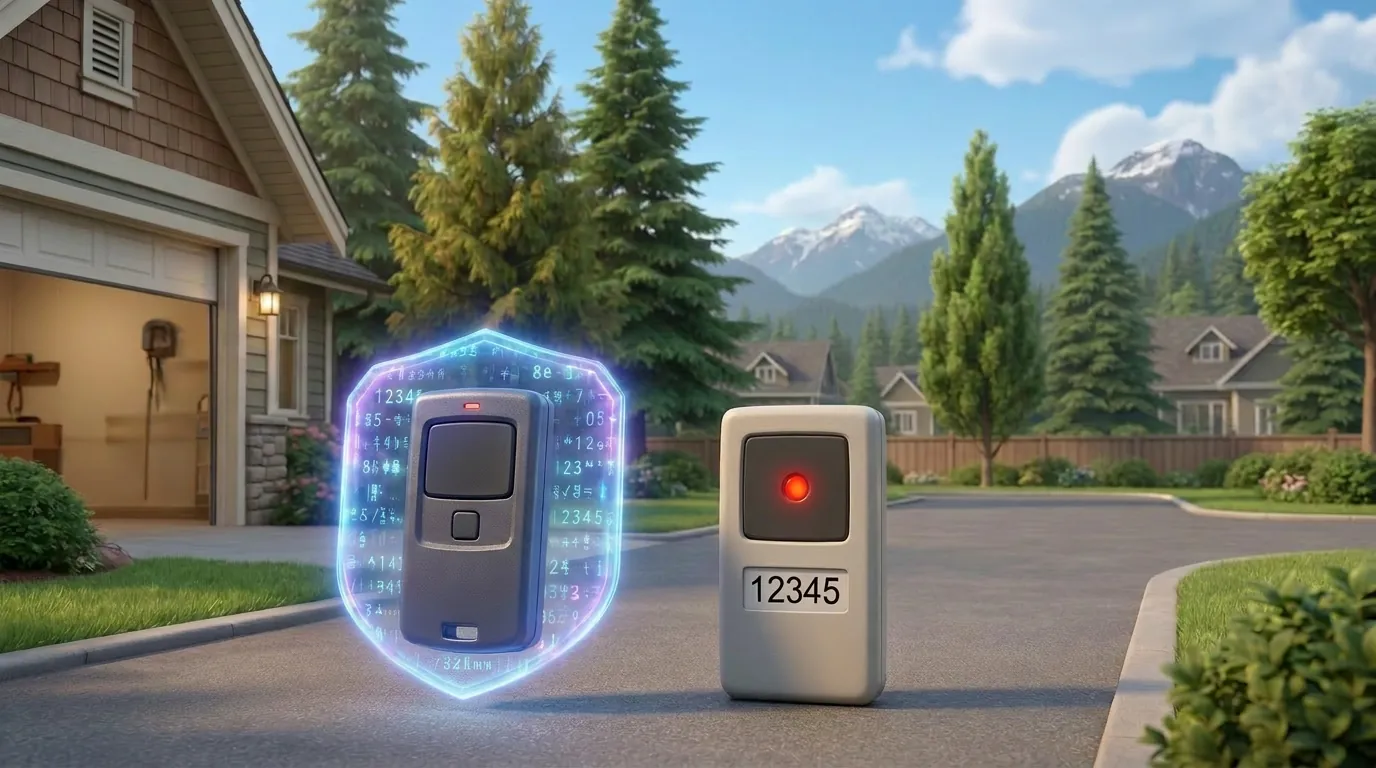
Most people think about garage security in terms of locks and cameras, and never consider the small remote clipped to the visor. Yet for homes with an older opener, that remote can be the weakest link in the whole house. The technology inside it, whether it sends a fixed code or a rolling one, decides whether a determined thief can copy your signal and walk in. For Maple Ridge homeowners, knowing which kind you have is a five-minute check that can close a real security gap. Here is what to look for.
The short answer: if your opener predates roughly the mid-2000s, it likely uses a fixed code that can, in theory, be captured and replayed. Newer openers use rolling code, which changes every press and defeats that attack. The fix, if you are on the old technology, is usually a new opener or receiver rather than just a new remote. Let us unpack the difference.
Fixed code vs. rolling code, explained simply
The distinction is simpler than it sounds. A fixed-code remote sends the exact same digital code every time you press the button, and the opener is set to respond to that one code. It works reliably, but it has a flaw: because the code never changes, anyone who captures it once can reuse it. That is the vulnerability that makes old remotes a security concern.
A rolling-code remote, by contrast, uses a code that changes every single time you press the button, following a sequence that only your remote and opener both know. If someone captures one transmission, it is already expired by the time they try to use it, so replaying it does nothing. This one change, swapping a static code for a constantly shifting one, is what modern garage security is built on, and brands market it under names like rolling code and Security+ 2.0.
The practical upshot is that the security lives in the opener as much as the remote. A rolling-code system needs both the remote and the garage door opener to speak the same changing-code language. That is why you usually cannot make an old fixed-code opener secure just by buying a fancier remote; the opener itself has to support the technology.
How to tell which you have
You do not need to be technical to figure out which camp your opener is in. Start with age, which is the strongest single clue. Openers manufactured before roughly 2005 commonly use fixed code, while units from the mid-2000s onward generally use rolling code. If you know roughly when your opener was installed, that alone gets you most of the way to an answer.
Beyond age, look at the opener unit itself. Find the brand and model on the motor housing, and look for a learn or program button, which became standard alongside rolling code, and for any security branding printed on the unit. Terms like rolling code, or a security label, point to the modern technology. A very old opener with no learn button and a simple set of dip-switches inside the remote is a strong sign of fixed code.
If you would rather be sure than guess, this is something a technician can confirm quickly, and it is worth confirming if your opener is in that mid-2000s grey zone. Knowing definitively whether your door is on the old or new technology tells you whether you have a security gap to close or can rest easy.
Comparison: security, age, and upgrade path
Laying the two side by side makes the decision clear. This table sums up where each stands and what it means for you.
| Feature | Fixed code | Rolling code |
|---|---|---|
| Code behaviour | Same code every press | Changes every press |
| Copy/replay risk | Vulnerable to code grabbers | Captured codes are useless |
| Typical era | Pre-2005 openers | Mid-2000s onward |
| Upgrade path | New opener or receiver | Already secure; keep current |
A few takeaways fall out of that:
- Opener from before the mid-2000s: assume fixed code and consider upgrading.
- Opener from the last fifteen years or so: very likely rolling code already.
- Buying a remote alone will not add rolling code to a fixed-code opener.
- A keypad inherits the security of the opener it is paired with, so it is only as safe as the opener.
Upgrading in Maple Ridge: remote, receiver, or opener
If you have confirmed you are on fixed code and want to close the gap, you have a few options depending on your equipment. In some cases an updated receiver can add rolling-code capability to an otherwise sound opener. More often, on a unit old enough to be fixed code, the practical and cost-effective move is a new opener, because a motor from that era is usually approaching the end of its service life anyway and you would be replacing it before long regardless.
That timing is what makes the upgrade good value rather than just an expense. A new opener brings rolling-code security, battery backup for our outage-prone winters, and smart phone control all at once, instead of spending money to bolt one feature onto an aging unit. If you only need a remote or keypad for a door that is already on rolling code, that is a simple remote replacement and nothing more.
Picture a Maple Ridge homeowner who discovers their opener dates to the late 1990s and still uses dip-switch remotes. Rather than buy yet another remote for a unit that is both insecure and on borrowed time, they upgrade to a modern opener, gaining rolling-code protection, a battery backup for windstorm season, and an app that tells them if the door is open. One installation closes the security gap and modernizes the whole garage. If you are not sure which technology you have, or want help choosing the right upgrade, for remote replacement in Maple Ridge, call (778) 201-5640, or , and we will make sure your garage is not the easy way in.
Frequently Asked Questions
How do I know if my garage remote is rolling-code or fixed-code?
Age is the quickest clue. Openers made before roughly 2005 often use fixed code, while units from the mid-2000s onward generally use rolling code. Check the opener's brand and model, and look for security branding like a learn button and terms such as rolling code or a security suffix. When in doubt, a technician can confirm in minutes.
Can my garage door remote really be copied?
An older fixed-code remote can be, yes. Because it sends the same code every time, an inexpensive code-grabbing device can capture and replay your signal to open the door. Rolling-code systems change the code every press, so a captured code is already useless, which closes that particular vulnerability.
Do I need a new opener to get rolling-code security?
Not always. If your opener already supports rolling code, you may just need a compatible remote or to reprogram. If your opener is an older fixed-code unit, you generally need a new opener or an updated receiver to gain true rolling-code protection, since the security lives in the opener, not only the remote.
Are garage door keypads secure?
Modern wireless keypads paired with a rolling-code opener are reasonably secure, since they use the same changing-code system. The main risks are a guessable PIN or one shared too widely. Choose a non-obvious code, change it periodically, and treat it like any other access credential to keep it safe.
What is Security+ 2.0?
Security+ 2.0 is a rolling-code technology used by some major opener brands that encrypts the signal between the remote and the opener for added protection. It is one example of the modern rolling-code systems that have replaced older fixed-code designs. The key point is that it changes the code each use rather than sending a static one.
Is it worth upgrading an old fixed-code garage opener?
If your opener predates rolling code, upgrading is worth strong consideration, both for the security and because a unit that old is usually nearing the end of its life anyway. A new opener brings rolling-code protection, battery backup, and smart features in one step, which is better value than patching security onto an aging motor.