Painting a Garage Door in Mission: A Summer Guide to a Finish That Lasts
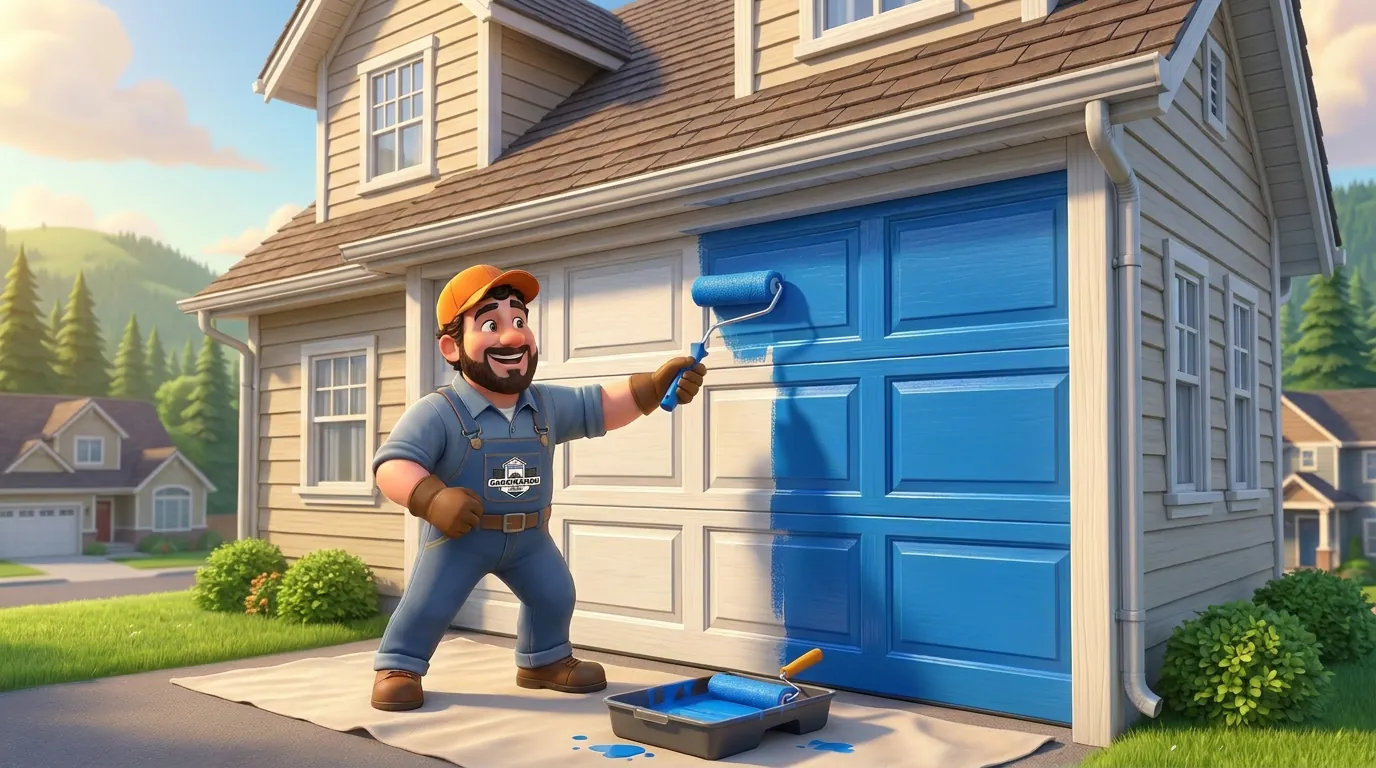
A garage door can take up a third or more of your home’s street-facing facade, so when the paint goes chalky, faded, or streaky, the whole house looks tired. Repainting is one of the cheapest, highest-impact upgrades you can make to your curb appeal. The trick in Mission, and across the Fraser Valley, is timing. Our long wet season gives paint very few good windows to cure properly, and summer is the best one you will get.
The short version: prep matters more than the paint itself, and dry summer weather matters more than both. A door cleaned, sanded, and primed during a dry July stretch will hold its finish for years. The same paint slapped on a damp door in October will be peeling by spring. Here is how to do it right.
Why summer is the only good time to paint here
Paint needs warmth and dryness to cure into a hard, durable film. In Mission, that combination is rare outside the summer months. Apply exterior paint when the air or the surface is damp, or when overnight temperatures dip too low, and the film never fully hardens. It stays soft, traps moisture underneath, and starts lifting at the edges within months.
Summer flips all of that in your favour. A dry, warm stretch lets each coat flash off and cure on schedule, and gives the primer a clean, dry surface to bond to. You also get long daylight hours to fit the prep, primer, and two topcoats into the right sequence without racing the weather. Check the forecast and pick a window with no rain for at least a day or two after you finish.
This is also why exterior painting and new-door installs cluster in summer here. If your door is too far gone to rescue with paint, summer is the right time for a garage door installation too, for exactly the same weather reasons.
Prep that makes the paint last
The part everyone wants to skip is the part that decides whether your work lasts five years or five months. Prep is the whole game. Take your time here and the painting itself goes quickly.
- Wash the door thoroughly with mild detergent and water to strip off dirt, pollen, and any chalky residue, then rinse and let it dry completely.
- Scrape and sand any peeling, flaking, or rusted areas back to a sound surface.
- Spot-treat bare metal and rust spots, then prime them with a metal-appropriate primer.
- Mask off the weatherstripping, handles, hinges, and the window trim with painter’s tape.
- Make sure the surface is bone dry before you open a can of paint.
Do not cut corners on the cleaning and the priming. The vast majority of paint failures we see on doors trace back to a surface that was dirty, damp, or unprimed, not to a bad choice of paint. A clean, dry, primed door is what the topcoat needs to grip.
Paint and process for a finish that holds
For the paint itself, a quality exterior acrylic latex is the right choice for a steel door. It flexes as the metal expands in the heat and contracts in the cool, which is exactly what a south-facing door in a Mission summer does all day. Avoid oil-based products on steel, since they can grow brittle and crack on a surface that moves and warms.
Apply in thin coats rather than one thick one. Plan for two topcoats over the primer, letting each dry fully before the next, and work with a brush for the recessed panel edges and a roller or sprayer for the flat faces. Two thin coats level out smoother and bond better than a single heavy pass, which tends to sag and stay tacky. Choose a colour that suits the house and resists fading; deep, dark colours look sharp but absorb more heat, so account for that on a sun-exposed door.
Timing within the day matters too, not just the season. Start in mid-morning once any overnight dew has burned off, and aim to have your final coat on by mid-afternoon so it can set up before the cooler, damper evening air rolls in. Painting a panel in full afternoon sun is the opposite trap, because paint that flashes off too fast can leave brush marks and bond poorly. A door in light shade on a warm, dry day is the sweet spot, so plan your sequence around where the sun falls on the door through the afternoon.
Wood doors follow the same process but with extra care, because moisture is the enemy. Every exposed edge needs to be sealed, and you should expect to refresh the finish more often than you would on steel. Keeping that finish intact is part of ongoing garage door maintenance on a wood door in our climate, not a one-time job.
When painting is not the answer
A fresh coat works wonders on a door that is structurally fine and merely looking its age. It does nothing for a door with real problems. If the panels are dented, the steel has rusted through, a wood door is starting to rot, or the door is uninsulated and noisy, paint is lipstick on a worn-out part. In those cases the money is far better spent replacing the door than refinishing it.
Picture a Mission homeowner with a 25-year-old door that is faded but solid, versus a neighbour whose door is faded and pocked with rust holes along the bottom seam. The first is a perfect candidate for a summer repaint that will look new for years. The second will see that rust bleed back through any paint within a season, because the underlying problem is corrosion, not colour.
Not sure which one you have? We can tell you fast whether your door is worth refinishing or due for replacement, and handle the professional door painting if you would rather not spend your summer on a ladder. or call (778) 201-5640, and we will help you get curb appeal that actually survives our wet season.
Frequently Asked Questions
What is the best paint for a steel garage door?
A high-quality exterior acrylic latex paint is the standard for steel doors. It flexes with the metal as it expands and contracts, resists fading, and stands up to moisture. Pair it with a primer made for metal, and avoid oil-based paints, which can become brittle and crack on a door that moves and heats up.
Do I need to prime a garage door before painting?
Almost always, yes. Primer is what makes the topcoat actually bond and last. Bare metal, previously rusted spots, and any area sanded down to the substrate all need a suitable primer first. Skipping primer is the single most common reason a fresh paint job peels within a year in our climate.
What temperature and humidity do I need to paint a garage door?
Aim for a dry stretch with temperatures roughly between 10 and 30 degrees Celsius and low humidity, which is why a Mission summer is the ideal window. Paint applied in damp or cool conditions cures poorly and is far more likely to peel, so check that no rain is forecast for at least 24 to 48 hours.
How many coats of paint does a garage door need?
Plan on a coat of primer plus two thin topcoats. Two thin coats level out better and last longer than one heavy coat, which can sag and stay soft. Let each coat dry fully per the paint's instructions before adding the next, and do not rush the recoat times in humid weather.
Should I paint or replace my garage door?
If the door is structurally sound and just looks tired, faded, or chalky, painting is a cheap, high-impact refresh. If it is dented, rusted through, rotting (on wood), or poorly insulated, the money is better spent on replacement. A quick assessment of the door's condition tells you which side of that line you are on.
How long does a painted garage door last before it needs redoing?
With proper prep and quality paint, a steel door can hold its finish for around 8 to 12 years. Wood doors in our damp climate need attention more often, typically every 2 to 4 years, because moisture is constantly working on the surface. Good prep is what stretches those intervals to the long end.