The 12-Point Garage Door Safety Check for Surrey Homeowners
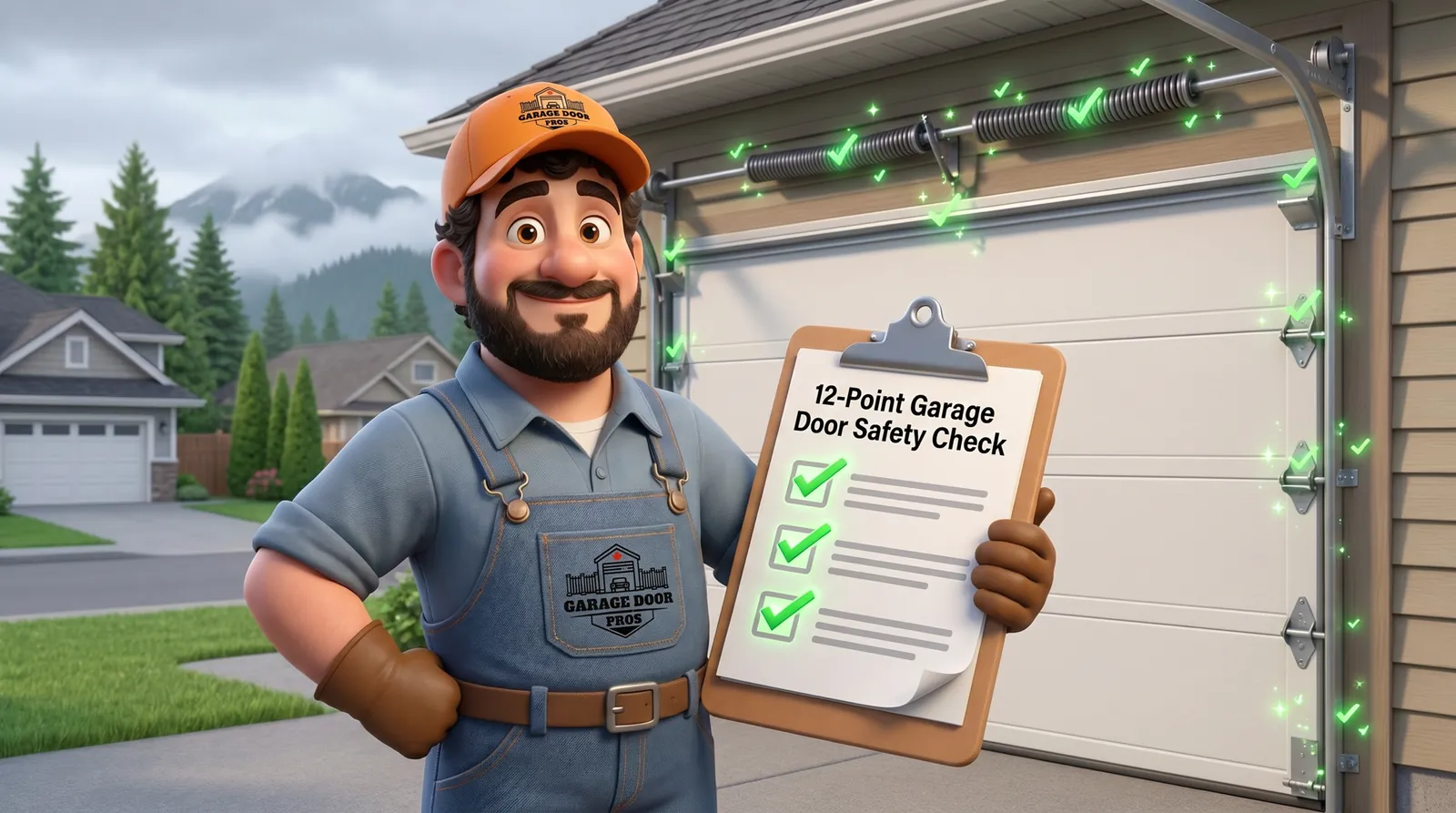
Your garage door is the largest and heaviest moving object in your home, and it cycles thousands of times a year over your cars, your kids, and your pets. Most of the emergency calls we get in Surrey trace back to a warning sign that was visible weeks earlier, if anyone had looked. The good news is that a thorough safety check takes about twenty minutes, needs no special tools, and catches the great majority of problems before they become failures. Here is exactly what to look at.
Two of the twelve points matter more than all the others: the balance test and the auto-reverse test. If you only do two things, do those. They confirm that the springs are not overloading your opener and that the door will not crush something in its path. We will cover the full list, then those two critical tests in detail.
The 12-point safety check
Set aside twenty minutes, close the door to start, and work through these in order. Most are simple looking-and-listening checks.
- Watch and listen as the door operates a full cycle, noting any grinding, scraping, or jerky movement.
- Inspect the springs above the door for gaps, rust, or stretching (look only, never touch).
- Check the cables on each side for fraying, rust, or loose strands.
- Examine the rollers for cracks, flat spots, or wobble as the door moves.
- Look over the hinges for cracks and loose or missing bolts.
- Inspect the tracks for dents, bends, or debris, and confirm they are firmly mounted.
- Tighten any visibly loose nuts, bolts, and brackets you can safely reach.
- Check the weather seal along the bottom and sides for cracks, gaps, or rot.
- Clean and check the photo-eye safety sensors near the floor, confirming they are aligned.
- Test the opener’s manual release cord so you know it works in a power outage.
- Run the balance test (detailed below).
- Run the auto-reverse safety test (detailed below).
Anything that looks worn, frayed, or damaged on the springs, cables, or rollers is a flag to get looked at rather than ignored. A frayed cable or a stretched spring does not heal; it fails, usually at the worst moment. Catching these is the whole point of the garage door maintenance routine, and the inspection is what turns a surprise breakdown into a planned, cheaper fix.
The two safety tests everyone skips
These are the tests that actually keep people safe, and they are the ones homeowners most often overlook because the door seems to be working fine.
The balance test checks your springs. With the door closed, pull the opener’s manual release cord to disconnect it, then lift the door by hand to about waist height and let go. A properly balanced door stays roughly where you leave it. If it slams down or springs upward, the spring tension is off. An unbalanced door forces the opener to fight the weight on every cycle, wearing it out early, and it points to a spring system that needs professional adjustment, because springs under tension are dangerous to work on yourself.
The auto-reverse test checks the door’s most important safety feature. Lay a solid object, such as a roll of paper towel standing on the floor, in the door’s path and close the door. The moment the door contacts the object it should reverse and go back up. If it keeps pushing or hesitates, the reversal system is not working correctly, which means the door could close on a child or pet. That is a stop-using-it-until-fixed situation, not a someday repair. While you are there, the photo-eye sensors should also reverse the door when something breaks the beam during closing.
What you can fix, and what needs a pro
A good portion of this list is firmly in homeowner territory. Cleaning sensors and tracks, checking seals, tightening accessible hardware, testing the manual release, and running the balance and auto-reverse tests are all safe and worthwhile to do yourself. They cost nothing and catch a lot.
The line to respect is anything involving the springs or cables under tension, and internal opener repairs. Garage door springs store enormous energy, and a slip while adjusting one causes serious injuries every year. If your balance test fails, if a cable is fraying, or if a spring shows a gap, that is the moment to call a technician rather than reach for tools. The same goes for a failed auto-reverse test that cleaning and sensor alignment do not fix, which may point to force settings or an opener fault best handled by a repair visit, and the photo-eye system is part of the garage door opener setup a pro can recalibrate.
How often, and seasonal timing for Surrey
Aim to run the full twelve points twice a year, with a quick look at the balance, sensors, and any new noises every few months in between. In Surrey, the smart timing is late summer or early fall, before the wet season puts the most strain on the door and before the cold makes any weakness worse. That way you head into winter with a door you trust.
Think of a typical scenario. A homeowner runs this check in August and notices the door feels heavier to lift than last time and slams down a little in the balance test. Nothing has broken yet, but those are early signs of a tiring spring. Booking an adjustment then, on their schedule, beats a snapped spring on a rainy December morning with a car trapped inside. That is the whole value of a routine check: trading a surprise emergency for a planned, minor fix.
If your check turns up something you would rather not tackle, or you would simply prefer a professional to do the full inspection, we are glad to help. in Surrey or call (778) 201-5640, and we will give your door a complete going-over and flag anything heading toward the end of its life.
Frequently Asked Questions
How often should I inspect my garage door?
A quick visual and functional check every few months is ideal, with a more thorough 12-point inspection a couple of times a year. In Surrey's damp climate, tie it to the change of seasons so it is easy to remember. Catching a worn part early is far cheaper and safer than dealing with a sudden failure.
What is the garage door balance test?
With the door closed, pull the opener's manual release cord and lift the door by hand to about waist height, then let go. A balanced door stays roughly in place. If it slams down or shoots up, the springs are out of adjustment, which strains the opener and is a sign the spring system needs professional attention.
What is the garage door auto-reverse test?
Place a solid object like a roll of paper towel flat on the floor in the door's path and close the door. When it touches the object it should immediately reverse. If it does not, the safety reversal is not working correctly, which is a serious hazard that needs to be fixed before you keep using the door normally.
What are signs of a failing garage door spring?
Watch for a door that feels much heavier to lift, opens unevenly or crookedly, slams shut, or shows a visible gap in a torsion spring coil. You may also hear a loud bang from the garage when a spring breaks. Springs are under high tension, so suspected spring problems are a job for a professional.
Which parts of a garage door safety check can I do myself?
Visual checks, cleaning, testing the balance and auto-reverse, checking the photo-eye sensors, and tightening accessible hardware are all homeowner-friendly. Anything involving the springs, cables under tension, or internal opener repairs should be left to a technician, because those parts can cause serious injury if mishandled.
How long does a garage door safety inspection take?
The homeowner version takes about 20 minutes once you know what to look for. A professional tune-up is similar in time but more thorough, covering force settings, spring tension, and parts approaching the end of their life that are hard to assess from the outside.