Garage Door Opener Dead After a Mission Power Outage? Try This Reset
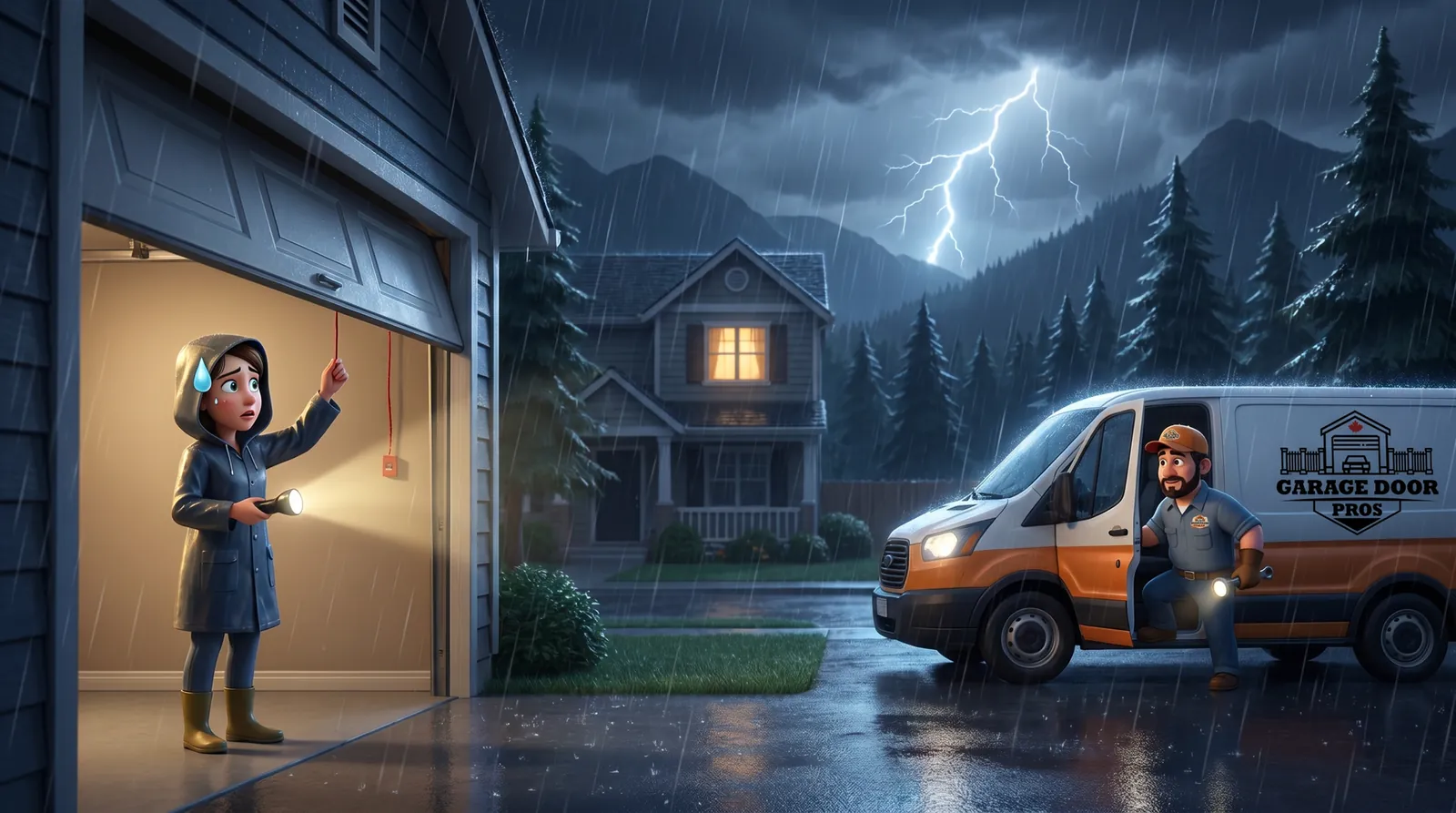
Fraser Valley windstorms knock the power out often enough that most Mission homeowners have lived through it, and a common surprise the next morning is a garage door opener that seems completely dead. Before you assume the worst and start pricing a new unit, take a breath. In the large majority of cases, the opener is fine and just needs a simple reset that takes a couple of minutes. Here is how to bring it back, step by step, and how to tell the rare real failure from the common false alarm.
The short answer: most post-outage openers were simply disconnected during the blackout, when someone pulled the red release cord to open the door by hand, or had their settings nudged. Re-engaging the trolley and, if needed, resetting the travel limits fixes the vast majority. Genuine surge damage to the logic board is real but uncommon. Work through the easy causes first.
Why outages confuse openers
A power outage interferes with an opener in a few predictable ways, and knowing them tells you where to look. The most common is the manual release. During a blackout, people pull the red emergency cord so they can lift the door by hand and get a car out. That cord disconnects the door from the motor, and if no one reconnects it, the opener will hum or do nothing while the door stays in manual mode. It looks broken; it is just disengaged.
The second is settings. Some openers lose or scramble their travel and force limits when power is cut abruptly, so when they come back they stop short of closing, reverse partway, or refuse to move the full distance. Nothing is damaged; the opener has simply forgotten how far the door should travel and needs recalibrating.
The third, and least common, is actual damage. A power surge when the grid comes back can harm the opener’s logic board, which is the one scenario that genuinely needs a garage door opener repair or replacement. Because it is the rarest cause, it is the last thing to check, not the first.
The reset: re-engaging after manual release
Start here, because this fixes most cases. The goal is to reconnect the door to the opener’s trolley so the motor can move it again. Work with the door fully closed for safety.
- Make sure the power is back on and the opener is plugged in and showing any lights.
- With the door all the way down, locate the trolley carriage on the rail and the lever or cord that disconnected it.
- Pull the red release cord back toward the door, or push the reconnect lever, until the trolley clicks back into the carriage.
- Press the wall button to run the opener once. As it cycles, the trolley should lock back into place with an audible click.
- Test the door through a full open and close to confirm normal operation.
If the door now runs normally, you are done and nothing was ever wrong with the opener itself. This single step resolves a large share of dead-after-outage calls, which is why it is worth doing before anything else.
Resetting force and travel limits
If the opener runs but the door will not close fully, stops short, or reverses before sealing, the travel limits need recalibrating. Every opener has a way to do this, usually with limit adjustment dials or buttons on the motor unit, and your manual gives the exact procedure for your model. In short, you set the down limit so the door seals against the floor without straining, and the up limit so it opens fully without over-travelling.
Force settings work alongside the limits. If the close force is set too sensitive, the opener can read normal resistance as an obstruction and reverse; too aggressive, and the safety reversal is compromised. After an outage scrambles these, a careful reset to the manufacturer’s guidance restores smooth, safe operation. Take your time and test after each adjustment.
One caution: if the door drags, binds, or moves unevenly while you are doing this, the problem is mechanical, not the settings. Forcing the limits to compensate for a roller catching in a rough track only masks a fault that will get worse. A door that needs more than a settings reset is telling you it needs a closer look, and that is where regular garage door maintenance would usually have caught the issue first.
When it is the logic board, not the outage
Occasionally an opener really is damaged. The tell is total unresponsiveness: after you have confirmed the power is back and the unit is plugged in, there are no lights, no motor hum, and no reaction at all to the wall button. At that point a surge may have taken out the logic board, and that is not a DIY repair. It is a clear repair-or-replace decision, and on an older opener, a fresh installation often makes more sense than chasing a new board, especially if the unit was already aging and lacked battery backup or rolling-code security.
Consider a typical Mission scenario. A homeowner rides out a winter windstorm, pulls the red cord to get their car out during the blackout, and the next morning the opener seems dead. They assume it is fried and brace for the cost of a new one. In reality the door is simply still in manual mode; a ten-second reconnect and one test cycle has it working perfectly, no parts and no service call needed. That is the outcome for most people who panic after an outage.
If you have re-engaged the trolley, reset the limits, and the opener still shows no life, or it is clearly surge-damaged, we can confirm whether it is a board fault and what makes sense next. for garage door services in Mission, call (778) 201-5640, or , and we will get your garage back to one-button reliable, storm season or not.
Frequently Asked Questions
Why won't my garage door opener work after a power outage?
Most often the door was disconnected from the opener during the outage using the manual release cord, and it simply needs to be re-engaged. Outages can also reset an opener's travel limits or drain a battery backup. Less commonly, a power surge damages the logic board. Start with the manual release and limits before assuming the worst.
I pulled the red cord during an outage and now the door is stuck. What do I do?
Pulling the red emergency release puts the door into manual mode. To reconnect it, with the door fully closed, pull the cord toward the door or push the trolley lever back until it re-engages with the carriage, then run the opener once. It should reconnect with an audible click and operate normally again.
Why won't my garage door close all the way after an outage?
An outage can scramble the opener's travel and force settings, so it stops short or reverses before sealing. Recalibrating the open and close limits per your opener's instructions usually fixes it. If the door also drags or binds, the cause may be mechanical rather than the settings.
Do I need to reprogram my remotes after a power outage?
Usually not. Most openers keep remote programming through an outage in non-volatile memory. If your remotes stop working only after power returns and the opener itself responds to the wall button, try reprogramming them, but in most cases they reconnect on their own.
Why isn't my battery backup working during outages?
Backup batteries wear out, typically lasting a few years, and a worn one will not hold a charge when you need it. Many openers show a warning light or beep when the battery is failing. If your backup did nothing during the last outage, the battery likely needs replacing.
How do I know if a power surge damaged my opener?
If the opener is completely unresponsive, with no lights, no motor hum, and no reaction to the wall button after you have confirmed it has power, a surge may have damaged the logic board. That is a repair-or-replace decision best confirmed by a technician, since board faults are not a DIY fix.