Grinding, Squealing, Banging? What Your Surrey Garage Door's Noises Mean
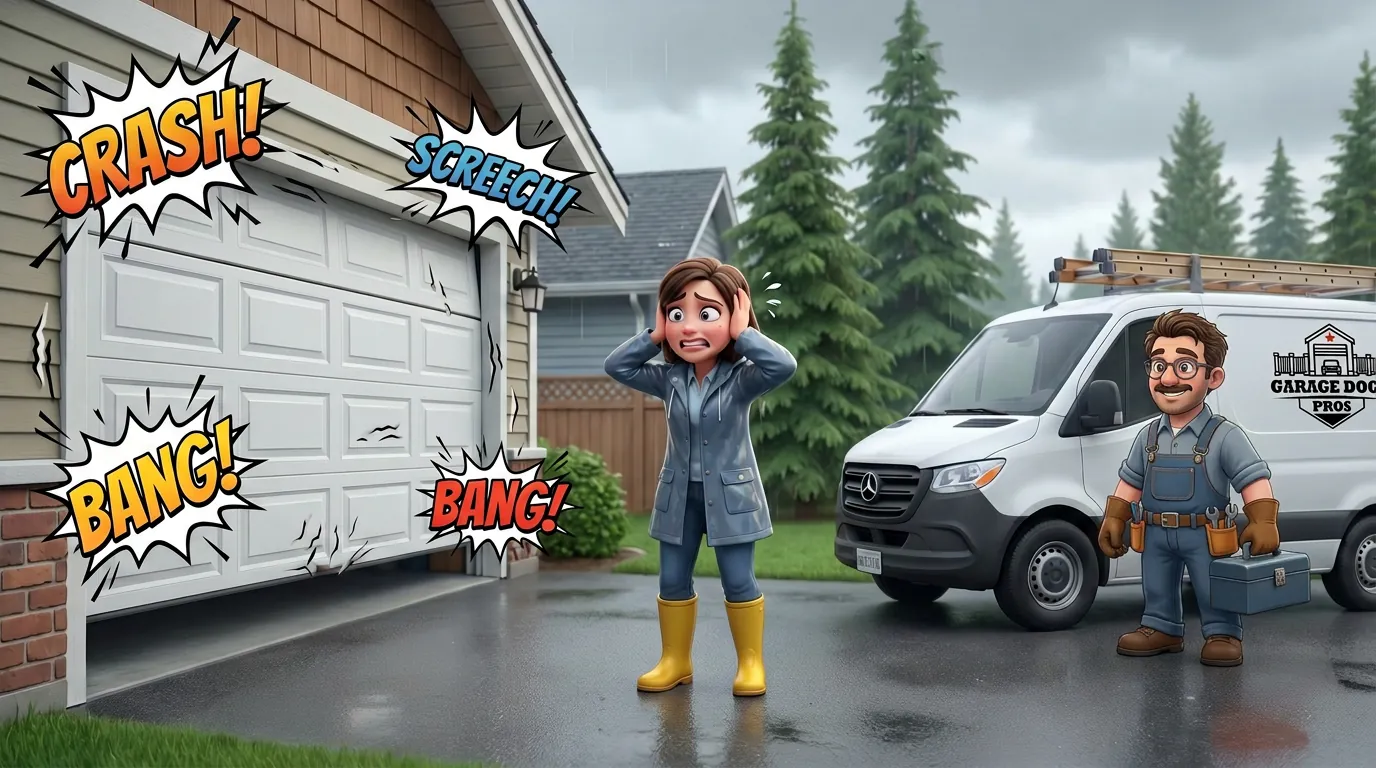
A garage door is one of the few machines in your home that tells you exactly when something is wrong, if you know how to listen. Long before a part fails completely, it usually starts making a new noise: a squeal that was not there last month, a grind on the way up, a bang that makes you jump. For Surrey homeowners, learning to read those sounds is the difference between a quick, cheap fix and a door that fails with a car trapped inside. Here is what your door is trying to tell you.
The short version: squeals are usually minor and about lubrication, grinding and rattling point to wear or loose parts, and a sudden bang or pop is the serious one, often a broken spring or cable. The urgency rises with the volume and suddenness of the noise. Let us decode each so you know what you are hearing and what to do about it.
Noise-to-cause cheat sheet
When a new sound appears, this table gets you to the likely cause and how quickly to act. Use it as a starting point, then read the detail below.
| Sound | Likely cause | Urgency |
|---|---|---|
| Squeal or screech | Dry rollers, hinges, bearings | Low - lubricate first |
| Grinding | Worn rollers, dry bearings, binding | Medium - inspect soon |
| Rattle or vibration | Loose hardware, chain, brackets | Low to medium - tighten |
| Pop or snap | Cable issue, hardware failing | High - stop and call |
| Loud bang | Broken torsion spring | High - stop and call |
The pattern is simple enough to remember: friction noises are usually maintenance, and sudden sharp noises are usually a failure. When in doubt, the louder and more sudden the sound, the sooner it deserves attention.
Squeal and grind: rollers, hinges, and lube
A squeal or screech is the most common and least alarming noise, and in our climate it is almost a seasonal event. Dry rollers, hinges, and bearings squeal as metal rubs metal, and Surrey’s damp washes lubricant off faster than drier climates do, so doors here need lubricating more often. A proper garage-door silicone or lithium lubricant on the rollers, hinges, and bearings usually silences a squeal quickly. If a thorough lubrication does not, a part has worn past the point grease can fix.
Grinding is a step up in seriousness. It typically means a roller has worn out, lost its bearings, or developed a flat spot, or the door is binding because it is slightly out of alignment. A grinding door is metal-on-metal under load, and it will not improve on its own. Lubrication might quiet it temporarily, but the underlying worn part keeps degrading, so grinding is a sign to inspect the rollers and track rather than just spray and hope.
Both noises are cheaper to deal with early. Worn rollers and dry bearings caught at the squeal-and-grind stage are a simple garage door repair; ignored, they cascade into track damage and harder failures. Staying ahead of them is exactly what routine garage door maintenance is for, and it is the single best defence against noise in a wet climate.
Bang and pop: springs and cables
These are the noises that should get you off the couch. A loud bang, often described as sounding like a firecracker or a gunshot in the garage, is most commonly a torsion spring snapping. The spring holds a tremendous amount of tension to counterbalance the door’s weight, so when it breaks it releases that energy all at once with a sharp crack. Afterward the door usually feels impossibly heavy, will not open with the opener, or opens only a few inches before stopping.
A pop or snap can be a cable letting go, which often happens around the same time as or just after a spring failure because the cables then take a load they were not meant to carry alone. A failed cable can let one side of the door drop, sending it crooked or off its track. Both springs and cables are high-tension components, which is precisely why they are dangerous to handle and why every reputable guide, including this one, says to leave them to a professional.
If you hear a bang or pop and the door is now heavy, crooked, or stuck, stop using it. Do not try to force it open with the opener, which can burn out the motor or worsen the damage, and do not attempt to release or replace a spring yourself. This is a stop-and-call situation, and it is one of the most common emergency calls we get across Surrey.
Rattles, cold-weather noise, and when to call a pro
Not every noise is dramatic. A rattle or vibration is usually the most benign, and it typically means hardware has worked loose over thousands of cycles: nuts, bolts, brackets, or the opener’s chain and rail. Going around the door and snugging up the accessible hardware, carefully and without touching the springs or cables, often quiets a rattle entirely. If tightening does not, the door may be unbalanced or a roller may be on its way out.
Cold weather adds its own chorus. As temperatures drop, lubricant thickens and metal contracts slightly, so a door that was quiet in August can get noticeably louder by December. Metal rollers and chain-drive openers are the usual offenders. Fresh lubricant suited to the conditions helps, and swapping noisy metal rollers for nylon ones is a popular, lasting fix for a chronically loud door.
The line for calling a professional is clear enough. Squeals and minor rattles you can usually handle with lubricant and a wrench. Grinding that does not stop, any pop or bang, or a door moving crookedly are signs to bring in help before a worn part becomes a failed one. If your door has developed a noise you would rather not guess about, for garage door repair in Surrey, call (778) 201-5640, or , and we will track down the sound and fix the cause, not just quiet the symptom.
Frequently Asked Questions
What does a loud bang from my garage door mean?
A single loud bang, often like a firecracker, is most commonly a torsion spring snapping. The spring stores a lot of energy, so it releases with a sharp noise, and afterward the door usually feels extremely heavy or will not open with the opener. A broken spring is dangerous to handle and should be left to a professional.
Why does my garage door grind when it opens?
Grinding usually points to worn rollers, dry or damaged bearings, or a door binding in the track. Metal rollers that have lost their lubrication or developed flat spots grind against the track, and a door slightly out of alignment can drag. Lubrication may quiet it, but persistent grinding means a part is wearing and needs inspection.
Is a squealing garage door something to worry about?
A squeal is usually the least urgent noise, most often dry rollers, hinges, or bearings that need lubrication. In Surrey's damp climate, lubricant washes off faster, so squealing is common and often fixed with proper garage-door lubricant. If a thorough lubrication does not stop it, a worn part is the likely cause.
Why does my garage door rattle or vibrate?
Rattling and vibration usually mean loose hardware: nuts, bolts, brackets, or the opener's chain or rail have worked loose over time and thousands of cycles. Tightening the accessible hardware often solves it. If the vibration is severe or comes with other noises, the door may be unbalanced or a roller may be failing.
Why is my garage door louder in cold weather?
Cold thickens lubricant and makes metal parts contract slightly, so a door that is quiet in summer can get noisier as temperatures drop. Metal rollers and chain-drive openers are especially prone to it. Fresh lubricant rated for the conditions helps, and switching noisy metal rollers to nylon ones makes a big difference.
Which garage door noises mean I should stop using it?
A loud bang (likely a broken spring), a sudden pop or snap (possibly a cable), or any grinding paired with the door moving crookedly are stop-and-call situations. These involve high-tension parts and can lead to the door falling or going off track. Squeals and minor rattles are less urgent but still worth addressing.