Garage Door Bottom Seals: Types and When to Replace Yours
The Short Answer
The bottom seal is the rubber strip along the bottom edge of your garage door. Most modern steel doors use a T-style or bulb seal that slides into an aluminum retainer; older and wood doors often use a J-type or a nail-on strip. To pick the right replacement, match the shape and width of the channel on your door. Replace the seal when it is cracked, flattened, stiff, or no longer touches the floor, or when you can see daylight under the closed door. On sloped or uneven floors, adding a threshold seal on the concrete helps close the remaining gaps.
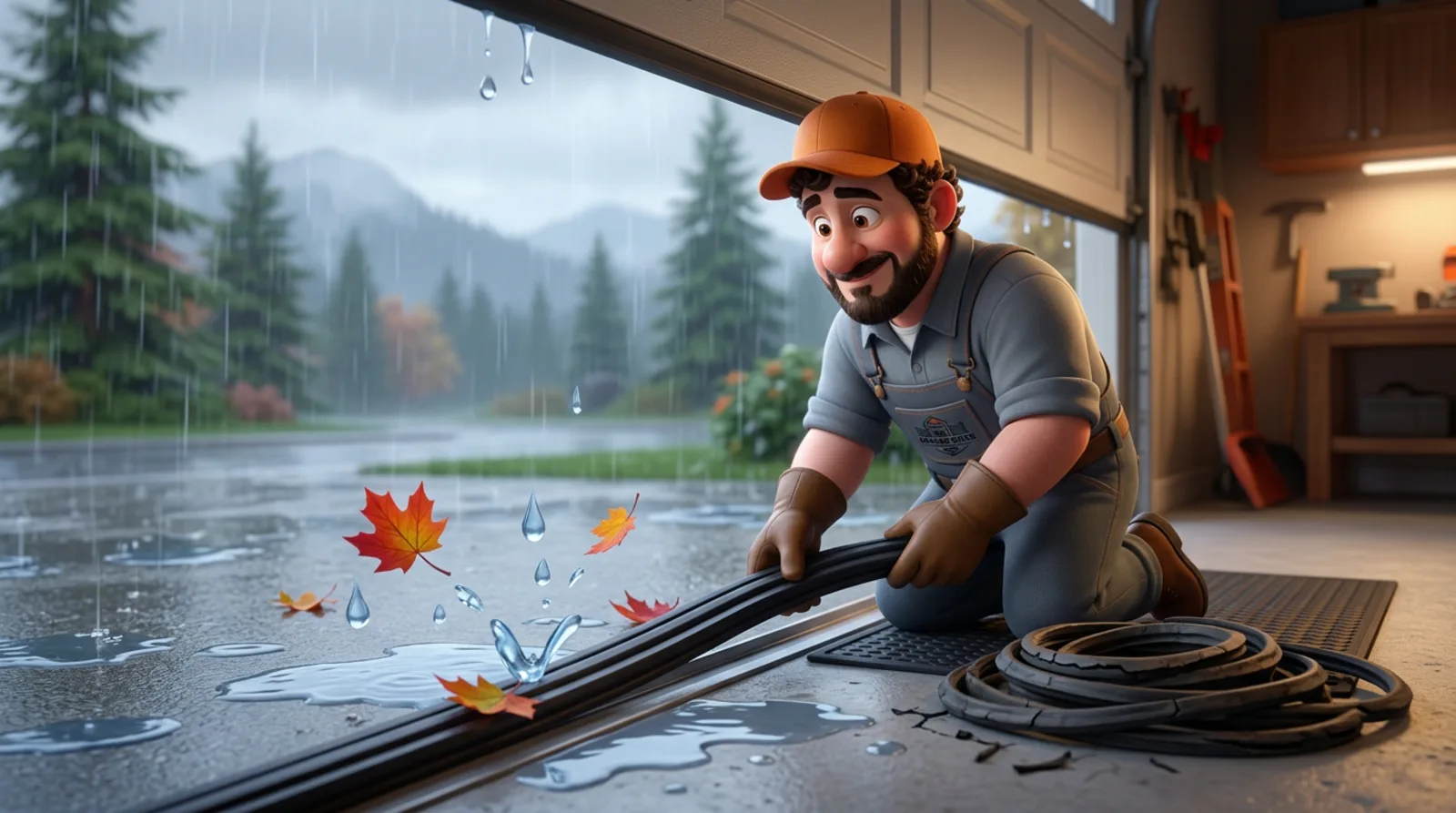
A worn bottom seal is a small part with an outsized effect. It lets in rain, leaves, cold air, and pests, and in a wet climate it is often where water damage in a garage begins.
Why the bottom seal matters
- Water. A good seal keeps wind-driven rain and runoff from soaking the garage floor and anything stored on it.
- Drafts and heat loss. In an attached garage, a gap under the door undoes much of the benefit of an insulated door.
- Pests and debris. Leaves, mice, and insects all find their way in through a gap at the floor.
- Door protection. The seal cushions the door as it closes, which helps the bottom panel and the floor.
The main types of bottom seal
| Seal type | How it attaches | Common on | Notes |
|---|---|---|---|
| T-style (single or double T) | Slides into a two-slot aluminum retainer | Most modern steel doors | The T-ends must match the retainer’s slot width |
| Bulb seal | Slides into a retainer; rounded bulb at the bottom | Steel doors, uneven floors | The bulb compresses to fill small dips in the floor |
| Beaded seal | Beaded edges slide into a matching retainer | Some steel door brands | Similar to T-style, different edge profile |
| J-type | Hooks over or into the bottom of the door | Some wood and older doors | Less common today |
| Flat or nail-on strip | Nailed or screwed to the bottom of the door | Wood doors without a retainer | Simple, but easier to tear |
The most important thing is that the replacement matches your door’s retainer. Two seals that look alike can have T-ends a few millimetres apart, and the wrong one will not slide in or will pop out in the first cold snap.
How to tell which seal you have
- Look under the door edge. With the door closed, crouch down and look at the bottom. A metal channel with two narrow slots means a slide-in T, bulb, or beaded seal. No channel means a nail-on strip or J-type.
- Measure. Measure the width of the channel and the gap between the two slots, or the width of the existing seal laid flat.
- Check the ends. Slide a few centimetres of the old seal out at one end and look at the profile: T-shaped, beaded, or a simple flat edge.
- Bring a sample. A short piece of the old seal is the easiest way to match it at a supplier, or a technician can identify it on-site.
Signs your bottom seal needs replacing
- Daylight visible under the closed door, especially at the corners.
- Cracks, tears, or missing chunks along the rubber.
- The seal is flattened, hard, or brittle, and no longer springs back.
- Water, leaves, or dirt collect just inside the door after rain.
- The seal has pulled out of the retainer or hangs loose at the ends.
- Visible mould or the rubber has rotted where it sits on wet concrete.
Replacing it: DIY or call a pro?
On many steel doors, replacing a slide-in seal is a manageable DIY job: open the door to a comfortable working height and secure it so it cannot move, slide the old seal out, clean the channel, spray it lightly with soapy water, and feed the new seal in from one end. Trim it to length, leaving a little extra at each side so it meets the jamb.
It is a job for a technician when the retainer is bent or corroded, the bottom panel is damaged, the door does not stay put when partly open (a sign of a spring or balance problem), or you are not comfortable working under a raised door. While they are there, a technician can also check the side and top weatherstripping, since the bottom seal is only one part of the perimeter. Our older weather-stripping guide covers the side and top seals.
Bottom seal or threshold seal?
A threshold seal is a raised rubber strip glued to the concrete floor right under the closed door. It does not replace the bottom seal; it works with it. It helps when:
- the floor slopes or has dips that the bottom seal cannot fill;
- driveway water runs toward the garage in heavy rain;
- the door bottom is slightly uneven and leaves a gap at one corner.
Thresholds are driven over every day, so a durable, properly bonded strip and clean, dry concrete during installation make the difference between one that lasts years and one that peels off in a season.
Bottom seals in Chilliwack’s wet winters
Chilliwack’s combination of heavy rain and occasional hard cold snaps is about as tough as it gets on bottom seals. Water pools along the door, soaks into worn rubber, and then freezes overnight, bonding the seal to the concrete. When the opener tries to lift the door the next morning, the seal tears, or the opener strains against the frozen bottom edge. Rotting seals sitting on wet concrete are among the most common winter problems on doors across the Fraser Valley.
The fix is mostly timing. Swapping a tired seal before the first cold snap, sweeping water and slush away from the threshold, and adding a threshold seal where water runs toward the door keep the bottom edge dry. If the seal does freeze, free it gently with warm (not boiling) water or by carefully working a plastic putty knife along the edge, and never force the door with the opener. A fall winterization visit includes a bottom seal inspection and replacement if needed.
Get a seal that fits
Not sure which seal your door takes, or whether the retainer is still sound? , call (778) 201-5640, or . A technician can match and fit the right seal, check the side and top weatherstripping, and make sure the door closes evenly onto it, so rain and cold stay outside where they belong. If the door needs a broader tune-up as well, garage door maintenance in Chilliwack covers the full 12-point check.
Frequently Asked Questions
What are the main types of garage door bottom seals?
The most common are T-style (single or double T) seals and bulb seals that slide into an aluminum retainer, J-type seals for some wood and older doors, and flat or beaded strips that nail or screw directly to the door. The right type depends on the shape of the retainer or channel on the bottom of your door.
How do I know which bottom seal fits my garage door?
Look at the bottom edge of the door. If there is a metal channel with two narrow slots, measure the gap between the slots and the width of the channel; the seal's T-ends or beads must match that profile. Bringing a short cut piece of the old seal to compare, or having a technician identify it, avoids buying the wrong one.
How often should a garage door bottom seal be replaced?
Many seals last around five to ten years, but wet climates and cold snaps shorten that. Replace it when it is cracked, flattened, torn, stiff, or no longer touches the floor along its full length, or when you can see daylight under the closed door.
What is the difference between a bottom seal and a threshold seal?
A bottom seal attaches to the door itself. A threshold seal is a raised rubber strip glued to the garage floor under the door. A threshold seal helps where the floor is uneven or sloped, or where water runs toward the garage, and it can be used together with a bottom seal.
Can I replace a garage door bottom seal myself?
Often, yes. On most steel doors the old seal slides out of the retainer and the new one slides in, ideally with a little soapy water as lubricant. If the retainer is bent or corroded, or the door needs to be raised partway and secured, it is safer to have a technician do it.
Why does my garage door bottom seal freeze to the floor?
Water pools along the seal, then freezes overnight in a cold snap and bonds the rubber to the concrete. Clearing water and slush from the threshold, using a seal in good condition, and adding a threshold seal or improving drainage reduce the problem. Never force a frozen door open with the opener.