One Side of Your Garage Door Higher Than the Other? A Vancouver Fix
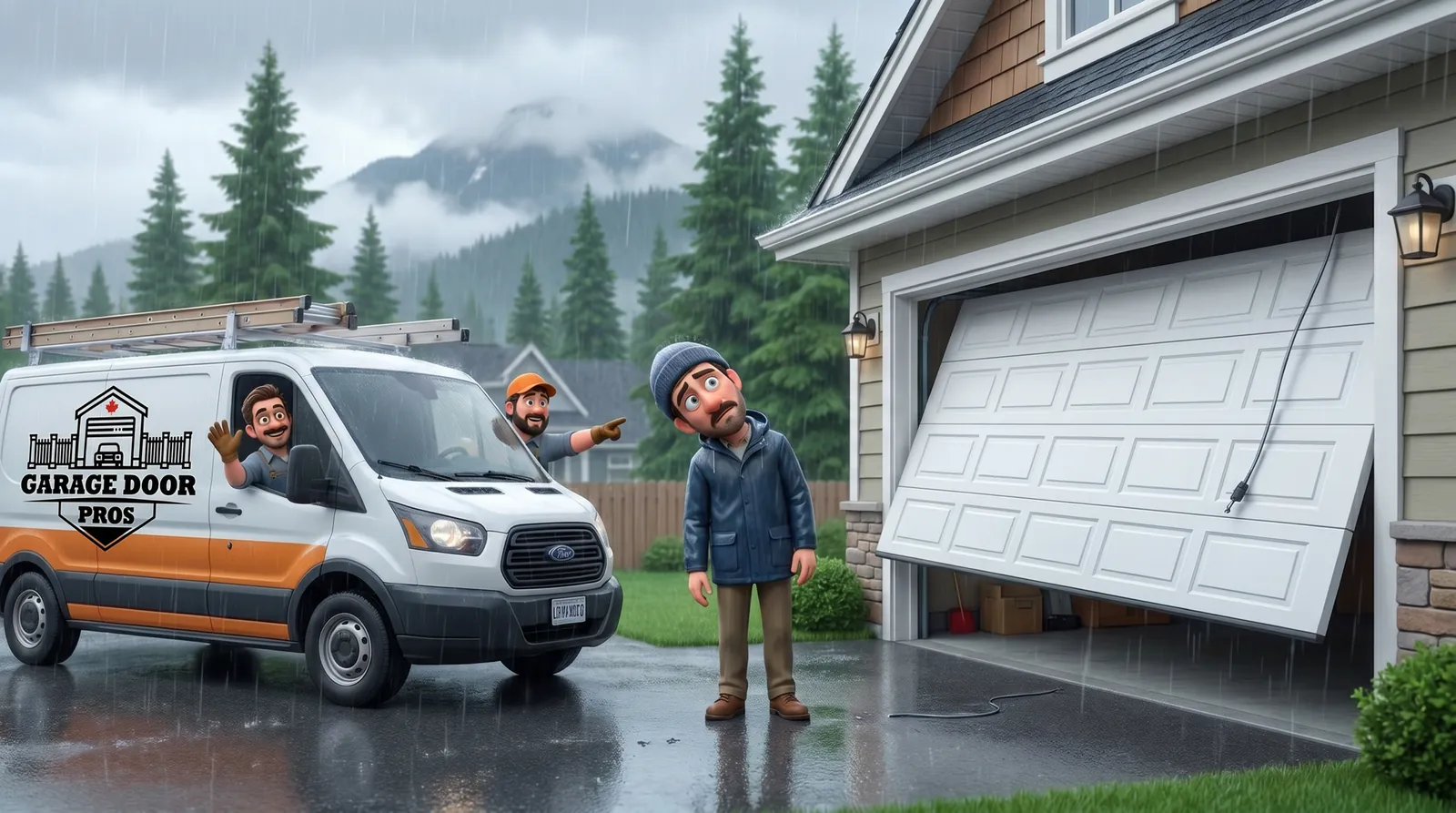
A garage door is supposed to move as one solid, level panel. So when you look up and see it hanging crooked, with one side noticeably higher than the other, it is unsettling, and it should be. That lopsided look is one of the clearest distress signals a door can send, and what you do in the next few minutes matters. The wrong move, forcing it with the opener, can turn a contained repair into a much bigger one. For Vancouver homeowners, here is what a crooked door means and how to handle it.
The short answer: stop using the door. A door that sits with one side higher than the other almost always has a cable or spring problem, and those parts are under enormous tension. Running the opener on a crooked door can drag it further off track, jam it, or cause a sudden failure. Leave it where it is and read on for what is happening and how the fix works.
Why one side rides higher
A level door stays level because the cables and springs on each side share the load evenly. When one side suddenly sits higher or lower, that balance has broken, and the cause is usually one of a few culprits. The most common is a cable problem: a lifting cable has frayed, snapped, or slipped off the drum it winds around, so that side loses its support and the door sags or rises unevenly.
Springs are the other prime suspect. If a spring weakens or breaks on one side of a two-spring system, that side no longer carries its share, and the door goes crooked as it moves. A jammed or broken roller can also bind one side in the track while the other keeps moving, twisting the door out of square. In every one of these cases, the door is telling you that the tensioned hardware doing the heavy lifting has failed somewhere.
What these causes share is that they involve the high-tension components, the cables, springs, and drums, that make a garage door both work and dangerous. That is exactly why a crooked door is not a force-it-and-see situation. It is a clear sign for a proper off-track door repair rather than a guess-and-push fix, because the parts involved can hurt you and the door can be made much worse.
What you can safely check, and what to leave alone
There is a narrow band of safe checks here, and it is worth knowing exactly where it ends. You can safely look. From a sensible distance, with the door stopped, you can often see the cause: a cable hanging loose or off its drum, a visible gap in a spring coil, or a roller obviously jammed or out of the track. Noticing which side is affected and what looks wrong is genuinely useful information, and none of it requires touching anything.
You can also safely stop making it worse. Disconnect the opener with the manual release if the door is in a stable position, so no one hits the button and runs it crooked. Keep people and cars clear of the door, since a door held up by a compromised cable or spring can drop. These are the right first moves, and they cost nothing.
Here is the safe line, in short:
- Safe to do: look at the door, note which side is affected, disconnect the opener if the door is stable, and keep people and vehicles well clear.
- Leave alone: re-seating cables, adjusting or unwinding springs, and lifting or muscling the door level.
- Never: run the opener to try to straighten it, which only drags it further off track.
Where the safe zone ends is anything hands-on with the tensioned parts. Do not try to re-seat a cable, adjust a spring, or muscle the door level. The cables and springs store enough energy to cause serious injury, and a door that is already crooked is unpredictable under load. This is the firm line that every honest guide draws, and it is the difference between a repair and a trip to emergency.
Why forcing it makes it worse
It is tempting to just hit the opener button and hope the door sorts itself out, but that is the single worst thing you can do with a crooked door, and it is worth understanding why. When the door is off balance, running the opener drags the high side and the low side at different rates, which pulls the rollers toward the edge of the track. Push it far enough and a roller pops out, and now the door is genuinely off track, wedged at an angle, and far harder to fix.
Forcing also piles load onto whatever has already failed. If a cable has slipped but not broken, running the door can finish it off; if one spring is weak, making the opener fight the imbalance can overstress the other side or burn out the motor. A problem that started as a single slipped cable, a modest fix, becomes a tangle of bent track, popped rollers, and a strained opener, all because the door got run when it should have been stopped.
This cascade is exactly how a manageable issue becomes an expensive one. The cheapest version of this repair is almost always the one caught before the door was forced, which is why stopping immediately is the most valuable thing you can do. Regular maintenance that catches a fraying cable or worn roller early prevents most of these failures from happening in the first place.
What a professional repair involves
When a technician handles a crooked or off-track door, the work follows a careful sequence built around controlling the tension safely. They start by diagnosing the actual cause, since a slipped cable, a broken spring, and a jammed roller all look similar from the driveway but need different fixes. From there they secure the door, relieve or control the spring tension with the proper tools, and repair or replace the failed components, then re-seat the door in its tracks and rebalance it so both sides carry the load evenly again.
Consider a typical Vancouver scenario. A homeowner notices their door hanging an inch higher on the left and, instead of forcing it, stops and calls. The technician finds a cable that slipped off its drum, re-seats it, checks the matching spring and the rollers, rebalances the door, and it is level and smooth again, a contained, affordable fix. Had the homeowner run the opener a few more times, that same slipped cable could have meant bent track and popped rollers, and a far longer afternoon.
If your door is hanging crooked, the best thing you can do is exactly what costs nothing: stop using it and get it assessed before it worsens. for off-track door repair in Vancouver, call (778) 201-5640, or , and we will diagnose the cause, handle the cables and springs safely, and get your door moving as one level panel again.
Frequently Asked Questions
Why is one side of my garage door higher than the other?
A door that hangs crooked, with one side higher, almost always points to a cable or spring problem: a cable has slipped off its drum, frayed, or broken, or a spring has weakened on one side. A roller jammed in the track can also cause it. Because cables and springs are under high tension, this is a problem to diagnose carefully, not force.
Is it safe to use a crooked garage door?
No. A door that is uneven is off balance, and running it can pull it further off track, jam it, or cause a cable or spring to fail suddenly. Stop using the opener, leave the door where it is if you can, and have it looked at. Forcing a crooked door is how a moderate repair becomes a major one.
Can I fix a snapped garage door cable myself?
It is not recommended. The cables work in tandem with the springs under heavy tension, and replacing one incorrectly, or working near a wound spring, causes serious injuries. Cable and spring work is the part of garage door repair best left to a trained technician with the right tools, even for confident DIYers.
Why did my garage door go off track?
Common causes include a broken or slipped cable, a worn or jammed roller, an impact like bumping the door with a vehicle, or hardware that loosened over time. Lack of maintenance accelerates several of these, since rusted rollers and frayed cables fail sooner. Forcing a door that is binding is another frequent trigger.
How much does it cost to fix a crooked or off-track garage door?
It depends on the cause. A cable that has slipped back onto its drum is a modest fix, while replacing broken cables, springs, or straightening a bent track costs more. The honest figure comes from an inspection, since a crooked door can be anything from a quick realignment to a cable-and-spring job.
Can I prevent my garage door from going off track?
Largely, yes. Regular maintenance that keeps rollers, cables, and springs in good shape catches the wear that leads to off-track failures, and not forcing a door that is binding avoids the rest. Keeping the tracks clean and the hardware tight, and addressing small issues early, is the best prevention.