Belt vs. Chain vs. Screw-Drive Garage Door Openers: A Surrey Buyer's Guide
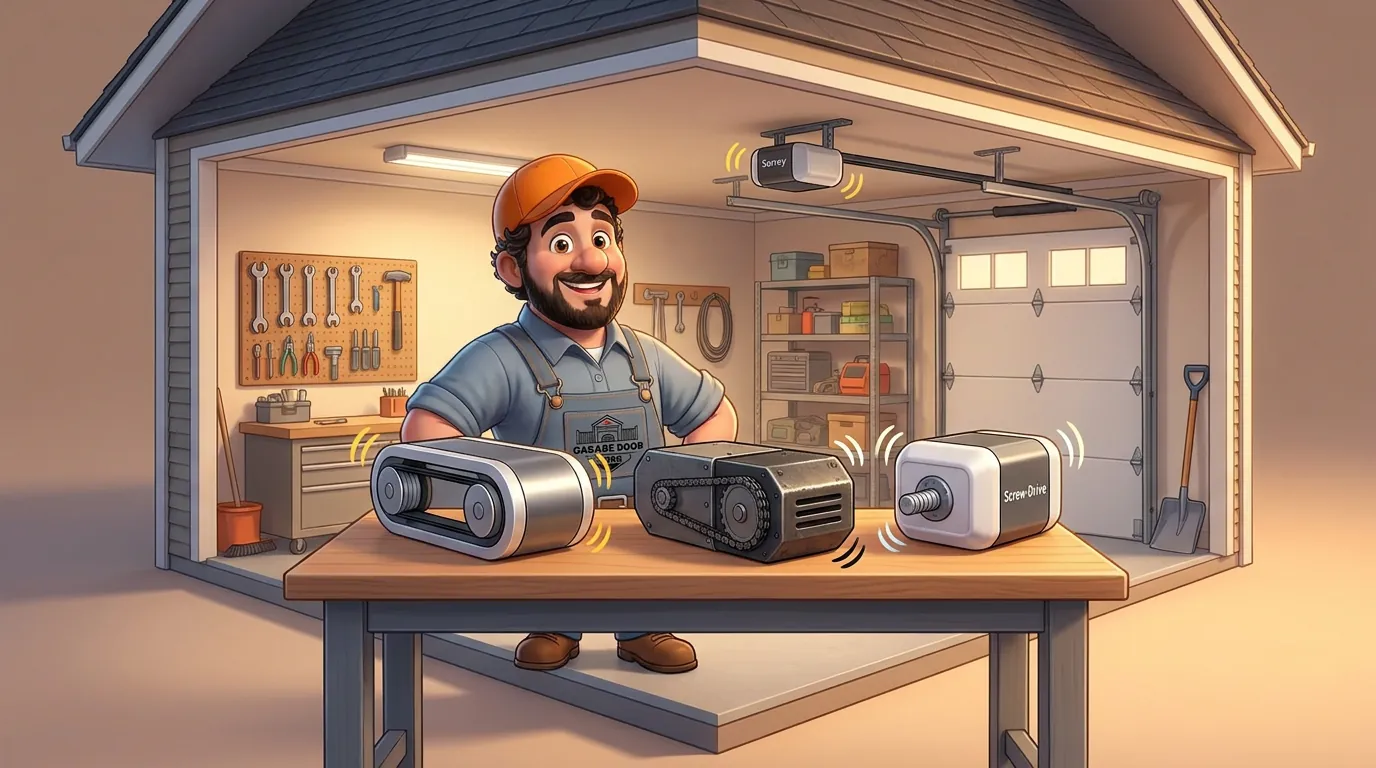
If your Surrey garage is attached to the house, or worse, tucked under a bedroom, the opener you choose is not just about lifting the door. It is about whether someone gets jolted awake every time a teenager comes home late. Openers have come a long way, and the three main drive types - belt, chain, and screw - each suit a different garage, budget, and tolerance for noise.
Here is the quick verdict before the details. Choose a belt drive for an attached garage where quiet matters most. Choose a chain drive for a detached garage where you want maximum value and noise is a non-issue. Choose a screw drive if you want a middle path with fewer moving parts. The rest of this guide explains how they differ so you can match the opener to your home.
How the three drive types actually work
Every opener does the same job, pulling a trolley along a rail to raise and lower the door, but the mechanism that moves that trolley is what sets them apart. A belt drive uses a reinforced rubber or fibreglass belt, much like a serpentine belt in a car. A chain drive uses a metal chain, similar to a bicycle chain. A screw drive turns a long threaded steel rod that moves the trolley directly.
Those mechanical differences drive everything else: how loud the opener is, how much it costs, and how much upkeep it needs. The belt absorbs vibration, the chain transmits it, and the screw splits the difference while using the fewest separate parts. None of them is inherently better. They are tuned for different priorities.
Power matters too, regardless of drive type. A heavier door, such as an insulated double or a solid wood one, needs more lifting force. When we handle a garage door opener install, matching the motor to the actual weight of your door is step one, because an underpowered unit wears out fast no matter how good the drive type is.
Noise, maintenance, and your garage layout
Noise is the deciding factor for most homeowners, and it comes down to your floor plan. If the garage shares a wall or ceiling with living space, belt drive is the clear winner. Chain drives are noticeably louder and send a rattle through the structure that you will feel as much as hear. In a detached garage across the yard, that noise simply does not matter, so paying a premium to silence it makes little sense.
Maintenance separates them too. Belt drives need almost nothing beyond the occasional check. Chain drives need periodic lubrication and tension adjustment to stay smooth and quiet, which is easy to forget. Screw drives have few parts to wear but benefit from a self-lubricating rail and an occasional wipe-down. In our damp climate, keeping any opener’s hardware clean and lubricated extends its life, which is part of what routine garage door maintenance covers.
Layout also shapes the install. Low-ceiling garages, tight headroom, and the position of the existing wiring all influence which unit fits cleanly. A wall-mount jackshaft opener, which mounts beside the door instead of on the ceiling, is a fourth option worth knowing about for garages with storage above or very high ceilings.
Side-by-side: belt vs. chain vs. screw-drive
When you line the three up on the factors that matter, the trade-offs are easy to see. This table summarizes how they compare for a typical Surrey home.
| Opener type | Noise level | Maintenance | Relative cost | Best for |
|---|---|---|---|---|
| Belt drive | Very quiet | Very low | Highest | Attached garages, rooms above |
| Chain drive | Loud | Moderate (lube, tension) | Lowest | Detached garages, value buyers |
| Screw drive | Moderate | Low | Mid-range | Heavier doors, balanced choice |
A few rules of thumb fall out of that:
- Garage under a bedroom or beside a living room: go belt drive.
- Detached garage, tight budget: chain drive is the smart value.
- Want fewer moving parts and a balanced cost: screw drive.
- Very high ceilings or overhead storage: ask about a wall-mount jackshaft.
Smart features and battery backup worth adding
Drive type is only half the decision. The features bolted onto a modern opener matter just as much. Wi-Fi connectivity lets you open, close, and check the door from your phone, and get an alert if it was left open. For a busy household, that one feature ends the “did I close the garage?” anxiety for good.
Battery backup deserves special attention in BC. When a windstorm knocks out power, a battery-backup opener still raises the door so you are not stuck. In some jurisdictions it is even required on new installs. Rolling-code security, now standard on quality units, changes the access code every cycle so an old fixed-code remote cannot be copied and replayed by a thief.
If your current opener is more than a decade old, replacing it is often the easiest way to gain all three at once. We can also handle opener repairs when the motor is fine and only a part has failed, so a new unit is not always the answer.
Which opener should a Surrey homeowner choose
For most of the homes we work on across Surrey, the recommendation is straightforward. If the garage is attached, a belt-drive opener with Wi-Fi and battery backup is the sweet spot: quiet, low-maintenance, and storm-ready. If the garage is detached and budget is tight, a chain drive does the same lifting job for less, and the noise is simply not a factor across the yard.
Consider a real example. A family in Surrey with a double garage under their primary bedroom kept getting woken by their old chain drive every time someone left early for work. Swapping to a belt drive with a soft-start motor cut the noise to a quiet hum, and adding battery backup meant the door still worked through the next Hydro outage. The upgrade paid for itself in sleep alone.
Not sure which drive type or motor size fits your door? That is exactly what an on-site assessment sorts out. for garage door installation in Surrey or call us at (778) 201-5640, and we will match the right opener to your garage, your door’s weight, and how quiet you need it to be.
Frequently Asked Questions
What is the quietest type of garage door opener?
A belt-drive opener is the quietest by a clear margin. It uses a reinforced rubber belt instead of a metal chain, so there is far less vibration and rattle. If your garage is attached or sits under a bedroom, belt drive is almost always the right call in a Surrey home.
Is a belt-drive opener worth the extra cost?
For an attached garage, yes. A belt unit usually costs a little more than a chain drive, but the drop in noise and vibration is significant, and belts need almost no maintenance. For a detached garage where noise does not matter, a chain drive saves money with no real downside.
Do screw-drive openers work well in the Lower Mainland climate?
Modern screw-drive openers with a self-lubricating rail handle our mild, damp winters fine. Older screw drives could get sticky in temperature swings, but that is far less of an issue here than in places with hard freezes. They sit between belt and chain on both noise and price.
How long does a garage door opener last?
A quality opener typically lasts 10 to 15 years, sometimes longer with maintenance. The motor usually outlives the accessories, so worn gears, a dying battery backup, or an outdated non-rolling-code remote are common reasons to replace one before the motor itself fails.
Should I install a garage door opener myself or hire a pro?
A pro install gets the safety sensors, force limits, and travel settings dialed in correctly, which is what keeps the door from crushing or reversing improperly. Given that an opener controls a heavy door over people and cars, professional installation is the safer choice for most homeowners.
Do I need battery backup on my garage door opener in BC?
It is well worth it here. BC Hydro windstorm outages are common, and a battery-backup opener still lets you get your car out when the power is down. If your garage is your main entry, treat battery backup as essential rather than optional.